The second life of legend Vozinha
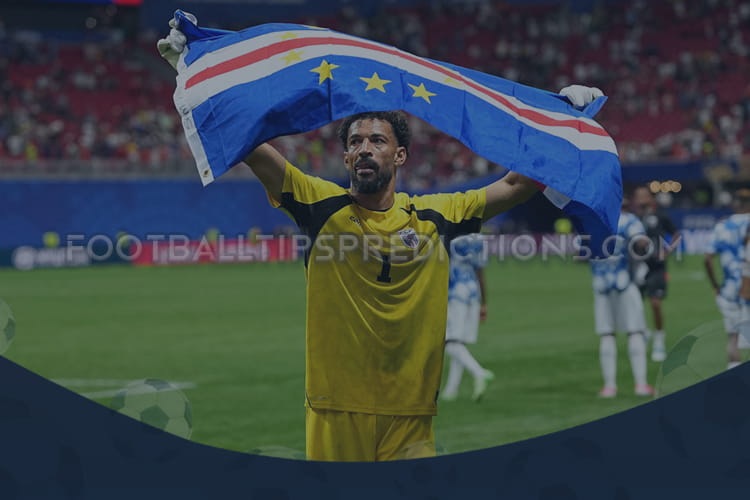
Vozinha became a Cape Verde hero after a stunning World Cup display against Spain, turning resilience, pride and experience into a legendary moment.
Vozinha And The Second Life Of A Cape Verdean Legend
Vozinha did much more than produce a great goalkeeping performance. He gave Cape Verde a moment that felt larger than football, larger than one match and larger than the scoreboard. At 40, at an age when many players are already being spoken about in the past tense, the goalkeeper stood in front of Spain and transformed one evening on American soil into a chapter of national memory. Every save, every shout, every gesture of command inside the penalty area seemed to carry the weight of a country that has learned to dream through resilience, pride and collective belief.
The Cape Verde goalkeeper rose to another level as one of the central figures of the World Cup, helping the colours of the islands shine brighter and giving the Blue Sharks an even deeper identity on the global stage. Against one of the most powerful attacking teams in the tournament, Vozinha resisted wave after wave of pressure. Spain tried to break him with movement, speed, technical quality and repeated shots, but the goalkeeper answered with calm hands, sharp reflexes and the authority of a man who understood the emotional size of the moment.
Out of contract with Chaves and apparently closer to the final stretch of his playing career than to another major reinvention, Vozinha reminded the football world that careers are not always written in a straight line. Sometimes, the most beautiful pages arrive when almost nobody expects them. Sometimes, a shirt becomes more than fabric. Sometimes, national duty gives a player a second life. That is what happened to Vozinha, a goalkeeper who has carried Cape Verde for years and who suddenly found himself celebrated far beyond the islands.
The draw against Spain was not just a result. It was a declaration of presence. For Cape Verde, it became a night of pride, emotion and recognition. For Vozinha, it was the kind of performance that turns a respected veteran into a symbol. He was no longer only the experienced goalkeeper of the national team. He became the face of a collective celebration, the man whose saves allowed a nation to believe that even the biggest opponents can be confronted without fear.
The emotion travelled quickly. From the stadium to the streets, from social media to family homes, from Cape Verde to communities spread across the world, the name Vozinha became a shout of joy. Nowhere was that impact felt more deeply than in Mindelo, the city where he was born and where his story carries a more intimate meaning. But the celebration was not limited to Cape Verde. Thousands of kilometres away, in Danbury, 16 hours by car from Atlanta, Carlos Andrade, a close friend and former schoolmate, was living the moment with tears, pride and disbelief.
Carlos did not watch that performance as a distant supporter. He watched it as someone who knew the boy before the world knew the goalkeeper. He watched it as someone who had seen the early dreams, the competitive fire, the sacrifices and the difficult days. For him, the match against Spain was not only about saves. It was about memory. It was about seeing a friend, a brother in spirit and a symbol of Cape Verdean humility finally receive the kind of recognition that felt long overdue.
For Carlos, the feeling had started before the match. During a visit to the national team camp in Hartford, he had sensed something different inside the group. There was calmness, unity and a peaceful confidence that made him believe, even while knowing the challenge Spain would represent. Cape Verde were not facing an ordinary opponent. They were facing a team with elite players, a long football tradition and the technical capacity to dominate matches. Yet Carlos felt that the Blue Sharks had something powerful moving quietly beneath the surface.
That intuition became reality during 90 unforgettable minutes. Carlos later described it as a special day, the fulfilment of a dream. He remembered telling Vozinha that the group transmitted serenity. He remembered believing in that energy. And when the final result confirmed the draw, emotion overwhelmed him. He cried, his son cried, and his 5-year-old daughter could not stop shouting the name of Vozinha. In that family scene, far from the stadium but emotionally attached to every second, the meaning of the performance became clear. This was football as identity, football as belonging, football as a bridge between generations.
Vozinha became a giant on social media after the match, but Carlos insists that fame has never been what defines him. According to those who know him best, the Cape Verde goalkeeper is not someone who chases attention or behaves like a star. He is described as humble, serious, grounded and deeply human. That contrast made the explosion of admiration even more powerful. The world was discovering a hero who had never needed to act like one.
Carlos speaks of him with the warmth of someone who understands the person behind the gloves. He sees Vozinha not as a sudden viral figure, but as a living legend of Cape Verdean sport. As a designer with his own shirt brand, Carlos had already created a design featuring the face of his friend and the word legend. After the match against Spain, that word no longer sounded like affection alone. It sounded accurate. Vozinha had earned it through years of service, discipline and loyalty to the national team.
What makes the story more moving is that Vozinha never built his journey around glamour. His longevity came from discipline, not spectacle. Carlos remembers a young man who was never especially drawn to parties, someone more devoted to family, grandparents, mother and father, than to the distractions that often surround football. He was intelligent at school and always carried himself with a sense of seriousness. Football was not just a hobby or a passing ambition. It was the dream he wanted to turn into a life.
That dream was never easy. Carlos remembers watching the matches of Vozinha and mutual friend Amílcar Rocha, seeing the competitive edge that already marked the future goalkeeper. He also recalls that Vozinha, at one stage, was on the bench behind Belton Neves, another respected figure from São Vicente football. Those details matter because they show that the path to becoming a national icon was not automatic. Vozinha had to wait, fight, improve and persist. He had to build a career through patience as much as talent.
From the beginning, his personality was shaped by leadership and competitiveness. Carlos describes a player who hated losing in any form. He had a combative voice, the voice of someone who complained, demanded more and pushed teammates forward. That kind of personality can sometimes be misunderstood from the outside, but inside a team it often becomes essential. Goalkeepers see the whole pitch. They organise, correct, warn and motivate. Vozinha did all of that with the intensity of someone who could never accept defeat lightly.
That competitive fire did not disappear with age. If anything, it became more refined. Against Spain, he did not look like a player holding on to the last days of a career. He looked like a goalkeeper who still had something to say. His movements had experience, his decisions carried authority and his presence gave Cape Verde a defensive confidence that grew as the match progressed. Every Spanish attack seemed to increase his importance. Every save made the story bigger.
The performance also carried a deeper emotional context. After the elimination from the Africa Cup of Nations, Vozinha had spoken to Carlos about the possibility of quitting. The disappointment had been heavy. It had hurt. For a player who had given so much to the national team, that kind of pain can become difficult to carry. There are moments in football when even the strongest competitors wonder whether they still have the strength to continue. Vozinha reached one of those moments.
Fortunately for Cape Verde, people around him convinced him not to stop. That decision now feels decisive. Had he walked away after that disappointment, the country would not have lived this World Cup night in the same way. The match against Spain became proof that continuing was worth it. It became the reward for resilience. It became the answer to doubt. In 90 minutes, as Carlos said, Vozinha saw his story change.
A Performance That Moved A Nation To Tears
The beauty of this story lies in the way private friendship and national pride became inseparable. Carlos Andrade and Vozinha now live in different worlds and different places, but their connection remains strong through affection, memory and shared Cape Verdean identity. Carlos has followed the national team for more than 14 years, even while being outside the group, contributing through artwork, promotion and emotional support. His motivation is simple: love for his friend and belief that the Cape Verdean people deserve to see their heroes celebrated.
That sense of mission gives this story a special human texture. Carlos is not only cheering from a distance. He is participating in the celebration of a culture. He is helping to amplify the image of a team and a player who represent something bigger than football. In communities far from the islands, Cape Verdean identity is often carried through music, language, food, family stories and sport. On this occasion, Vozinha became one of the strongest symbols of that identity.
The match against Spain gave Cape Verdeans around the world a common emotional place. People in Mindelo, Praia, Lisbon, Boston, Rotterdam, Paris, Danbury and many other places could feel connected through the same name and the same result. That is one of the rare powers of a national team. It gathers people who may be separated by geography but united by memory. For 90 minutes, the Blue Sharks belonged to everyone.
Vozinha became the central figure because goalkeepers often become the emotional face of resistance. When a smaller nation faces a football giant, every save feels like a victory inside the match. Every blocked shot protects more than a result. It protects belief. It allows the team to breathe. It allows supporters to hope. Against Spain, Vozinha did exactly that. He turned pressure into theatre, danger into applause and anxiety into pride.
His performance moved people to tears because it felt honest. There was nothing artificial about it. It was not a manufactured marketing moment or a polished story created after the match. It was an older goalkeeper, carrying years of service, standing between Spain and the Cape Verde goal with everything he had. That simplicity made the emotion stronger. Supporters saw effort, dignity and courage. They saw one of their own refusing to bend.
For Carlos, the tears came from recognition. He had known how much Vozinha dreamed of being at this level. He had known how much struggle and resilience were necessary to reach that stage. Watching him finally receive global admiration felt like justice. Football is often cruel with players from smaller countries, especially those who spend much of their careers outside the brightest lights of the major leagues. Many are respected locally but ignored internationally. On this night, Vozinha could not be ignored.
That recognition matters deeply. It is not only about headlines or social media praise. It is about validation for a career built with persistence. It is about a goalkeeper from Mindelo showing the world that excellence can come from places that are too often underestimated. It is about Cape Verde seeing itself represented with dignity and strength on a global platform.
The phrase that Carlos uses to describe him carries enormous weight: he is one of us. That is perhaps the most powerful compliment a national hero can receive. Vozinha is admired not because he feels distant, untouchable or above the people. He is admired because he feels close to them. His humility, seriousness and loyalty make him recognisable. Cape Verdeans see in him something familiar: resilience without arrogance, talent without vanity, pride without noise.
That is why the word legend has attached itself so naturally to his image. In football, legends are not created only by trophies or statistics. They are created by moments that remain alive in people. A save can become a story. A match can become a memory. A player can become a symbol. Vozinha has reached that place because his performance against Spain touched the emotional centre of a nation.
At club level, his future remains uncertain because he is out of contract with Chaves. But after this World Cup performance, his name carries a new force. At 40, he has shown that experience still has value, that leadership still matters and that a goalkeeper with discipline and hunger can still perform under the most demanding pressure. Whether this moment opens a new professional opportunity or simply strengthens his legacy, it has already changed the way his career will be remembered.
There is also something poetic about a goalkeeper reaching global attention so late in his journey. Younger players often get the spotlight because they represent potential. Vozinha represents something different: endurance. He represents the long road, the years of training, the disappointments absorbed, the family sacrifices, the moments when giving up seemed possible but continuing proved essential. His story speaks not only to footballers, but to anyone who has ever felt that recognition arrived late.
For Cape Verde, the performance against Spain will remain one of those matches that supporters will revisit for years. They will remember the saves, the tension, the pride and the feeling of watching their team stand firm against a major football nation. Children who shouted his name during the match may grow up with that memory as part of their first emotional connection to the national team. That is how football culture is built. One night becomes a story, and that story becomes inheritance.
Vozinha now carries that inheritance with him. He is no longer only the goalkeeper who helped Cape Verde resist Spain. He is the man who reminded a nation of its own strength. He is the veteran who turned uncertainty into celebration. He is the player who almost walked away, but stayed long enough to produce the performance that many will call the greatest of his life.
In the end, the second life of Vozinha as a legend was not born from noise, arrogance or spectacle. It was born from saves, discipline, humility and love for the shirt. It was born from the tears of friends, the joy of children and the pride of a people who saw themselves reflected in one man standing tall in goal. On American soil, against Spain, at 40 years old, Vozinha did not simply protect a result. He protected a dream. And for Cape Verde, that dream now has the face of a giant.
 England
 Spain
Spain Germany
 Italy
Italy France
 Uefa
Uefa Netherlands
 Portugal
 Brazil
 Argentina
 Australia
 Austria
 Belgium
 Bulgaria
 Colombia
 Croatia
 Czech Republic
 Denmark
 Finland
 Greece
 Hungary
 Ireland
 Israel
 Japan
Japan Mexico
 Northern Ireland
 Norway
 Poland
 Romania
 Russia
 Scotland
 Slovakia
 Slovenia
 South Korea
 Sweden
 Switzerland
 Turkey
 Ukraine
 Usa
Usa