Spanish federation shocked by ticket prices for World Cup final
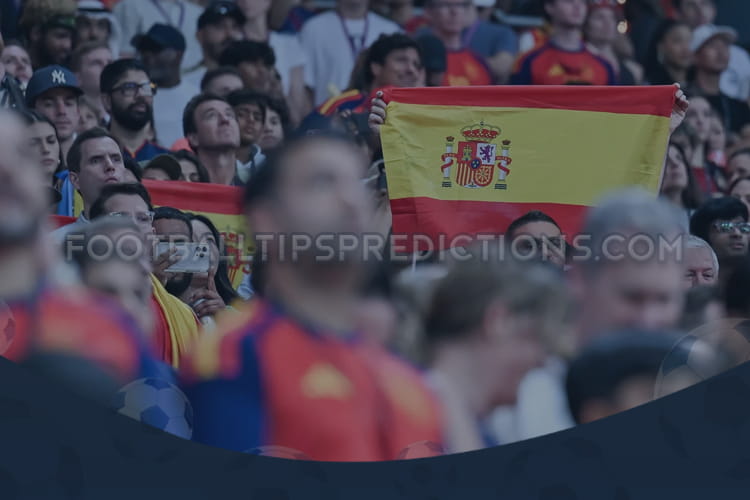
Spanish federation president Rafael Louzán has spoken out strongly about the ticket prices being charged for the final. Spain booked their place in the showpiece match on Tuesday by beating France.
Spanish Federation Criticises Huge Ticket Prices for World Cup Final
The joy of Spain reaching the World Cup final has quickly been followed by frustration for thousands of supporters hoping to travel and watch the national team compete for the trophy. After the semi-final victory, many Spanish fans began searching for tickets for the final, only to discover prices that have caused anger, disbelief and criticism from the Spanish football federation.
Spain booked their place in the final by beating France, a result that should have sparked only celebration across the country. Instead, attention soon turned to the cost of being inside the stadium for the biggest match in world football. For ordinary supporters, the numbers being shown on the official FIFA resale platform are far beyond what many families can realistically afford.
On the official FIFA resale website, the cheapest ticket still available is listed at 4,760 euros. That price does not offer a premium seat, a central position or a close view of the action. According to the available listings, that ticket places a fan high in the stadium, in a corner, far away from the pitch. For many supporters, that has made the situation even harder to accept. The lowest available price is already enormous, and the seat attached to it is one of the least attractive in the stadium.
The prices climb to even more extraordinary levels for better locations. A ticket behind one of the goals is listed at 117,201 euros, while a VIP place costs around 130,000 euros. Seats near the halfway line are being offered for approximately 35,000 euros. Those extreme prices have attracted attention, but for the Spanish federation the central problem is not only the most expensive tickets. The real concern is that even the cheapest available ticket has become unreachable for a large part of the fanbase.
Rafael Louzán, president of the Spanish football federation, has spoken strongly about the situation. He compared the pricing system to the way airline tickets change constantly, with costs rising and falling depending on demand. For Louzán, that model is unacceptable when applied to a World Cup final, especially when national team supporters are trying to follow their country at a historic moment.
"These prices are like plane tickets, they fluctuate enormously," Louzán said. "That is a real shame, something like this really cannot happen. There are many Spanish fans from the middle and lower classes who are doing everything they can to be there. And then you have these ticket prices, where you also have to add the cost of flights and hotels."
His comments reflect a wider concern about the direction of major football events. The World Cup final is one of the most watched sporting occasions in the world, but the people who create the atmosphere inside the stadium are often ordinary supporters. When prices rise to several thousand euros just for entry, the final begins to feel less like a national celebration and more like an event reserved for the wealthy.
For Spanish fans, the timing makes the issue even more painful. Many supporters waited until the semi-final was over before making serious travel plans. That is normal, because nobody could know for certain that Spain would reach the final. Once the victory over France was confirmed, fans began looking at flights, hotels and match tickets at almost the same time. The result was a perfect storm of high demand and huge costs.
The ticket price alone is only part of the problem. A supporter travelling from Spain must also consider flights, accommodation, food, transport and time away from work. In many cases, the total cost of attending the final could easily rise above 6,000 or 7,000 euros, even with the cheapest ticket available. For families, the amount becomes almost impossible. Two tickets, flights and hotels could cost more than many households earn in several months.
That is why Louzán placed special emphasis on supporters from the middle and lower classes. These are the fans who often follow the national team with the greatest passion, but they are also the ones most affected by extreme pricing. They may be willing to make sacrifices to attend, but there is a difference between sacrifice and impossibility. A World Cup final should be difficult to access because demand is high, not because prices exclude the majority of genuine supporters.
The frustration is made stronger by the expectations created before the tournament. FIFA had promised that tickets in the cheapest category would cost around 600 euros. That figure was already a significant amount for many fans, but it was still within the range that some supporters could plan for. However, the reality has been very different. In the first sales round, the cheapest category was already priced at 2,420 euros. Later, that price rose to more than 3,500 euros and then to 4,380 euros.
Now, with Spain in the final and demand rising sharply, the cheapest available resale ticket has reached 4,760 euros. From the perspective of supporters, the gap between the original promise and the current market is enormous. What was presented as a high but manageable price has become a figure that many fans see as completely unreasonable.
The official resale market is intended to provide a controlled and legitimate way for tickets to change hands. In theory, that should protect fans from fraud and from unofficial resale platforms. But when prices on the official system rise to this level, it becomes harder for football authorities to argue that the structure is protecting the ordinary supporter. The resale system may be official, but the prices still feel out of reach.
For the Spanish federation, the matter is also about image. Spain reaching a World Cup final is a moment of national pride. The federation wants as many Spanish voices as possible in the stadium, supporting the players and creating a powerful atmosphere. If only a small number of wealthy supporters can afford to attend, the connection between the team and its fans is weakened at precisely the moment when it should be strongest.
The issue also raises questions about the future of major tournaments. Football has increasingly become a global entertainment product, with sponsors, hospitality packages and premium experiences playing a major role. But the World Cup is different from a normal commercial event. It belongs to national teams and, emotionally, to the people of those countries. When prices reach luxury levels, many supporters feel that the spirit of the tournament is being lost.
Spain will still have fans at the final, but many who dreamed of being there will now have to watch from home, in bars or at public screenings. That does not reduce their passion, but it does change the experience. For supporters who followed the team through the tournament, missing the final because of price rather than availability is a bitter feeling.
Louzán made clear that the federation is not simply complaining about the most extreme listings. A VIP ticket costing 130,000 euros will always attract headlines, but those prices affect only a very small group of buyers. The deeper problem is that the lowest available price is already close to 5,000 euros. That is the figure that defines whether ordinary fans can attend or not.
There is also a symbolic element. A World Cup final should bring together supporters from different backgrounds, regions and generations. It should include lifelong fans, families, young supporters and people who have followed the national team for years. When the entry price becomes so high, the stadium risks becoming less representative of the country on the pitch.
For Spain, the football itself remains the main story. The team has earned its place in the final and now has the chance to win the biggest prize in the game. But around that achievement, a difficult debate is growing. The players have given supporters a reason to dream, while the ticket market has made that dream physically impossible for many of them.
The final will still be a spectacular event, watched by millions around the world. The stadium will still be full, the cameras will still capture the colour and noise, and the match will still decide the world champion. But for many Spanish fans, the days before the final have already brought a dose of disappointment. They wanted to follow their team to the biggest stage of all. Instead, they found prices that made the dream feel further away than ever.
The anger from the Spanish federation shows that this is not just a fan complaint. It is now a public issue for the governing body of Spanish football. Louzán has made the position clear: prices of this level are not acceptable for a tournament that should belong to supporters as much as to sponsors, executives and hospitality guests.
Spain will prepare for the final with excitement and ambition. But away from the training pitch, the discussion around ticket prices is unlikely to disappear quickly. For many fans, the question is simple: what is the value of reaching a World Cup final if the people who love the team most cannot afford to be there?
 England
 Spain
Spain Germany
 Italy
Italy France
 Uefa
Uefa Netherlands
 Portugal
 Brazil
 Argentina
 Australia
 Austria
 Belgium
 Bulgaria
 Colombia
 Croatia
 Czech Republic
 Denmark
 Finland
 Greece
 Hungary
 Ireland
 Israel
 Japan
Japan Mexico
 Northern Ireland
 Norway
 Poland
 Romania
 Russia
 Scotland
 Slovakia
 Slovenia
 South Korea
 Sweden
 Switzerland
 Turkey
 Ukraine
 Usa
Usa