Liverpool and Brighton make Oranje history
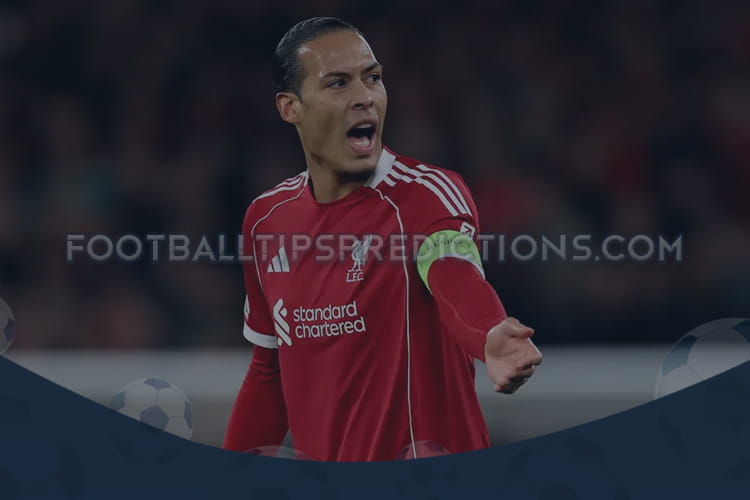
Liverpool and Brighton & Hove Albion are the main suppliers to the Netherlands World Cup squad, with three players each. The Reds are represented in Ronald Koeman’s selection by Virgil van Dijk, Cody Gakpo and Ryan Gravenberch. Brighton contribute Bart Verbruggen, Jan Paul van Hecke and Mats Wieffer.
Liverpool and Brighton create a historic first for the Netherlands
Liverpool and Brighton & Hove Albion have created a historic first for the Netherlands national team, with both foreign clubs becoming the biggest suppliers of players to Oranje for a World Cup squad. Ronald Koeman’s selection includes three players from Liverpool and three from Brighton, meaning that, for the first time at a World Cup, the leading club representation in the Dutch squad comes from outside the Netherlands.
The Reds are represented by Virgil van Dijk, Cody Gakpo and Ryan Gravenberch. Brighton, meanwhile, also have three players in the squad: Bart Verbruggen, Jan Paul van Hecke and Mats Wieffer. It is a striking detail in the composition of Koeman’s group and says a great deal about the current spread of Dutch talent across European football.
A World Cup first for foreign clubs
Never before had foreign clubs been the main suppliers of players to the Netherlands at a World Cup. It had already happened at European Championship level, with Barcelona Fc famously providing six players for the Oranje squad at EURO 2000, but the same had not yet occurred on the biggest international stage.
This time, Liverpool and Brighton share that status. For Liverpool, the presence of Van Dijk, Gakpo and Gravenberch underlines the strong Dutch influence at Anfield. Van Dijk remains one of the leaders of the national team, Gakpo is an important attacking option, and Gravenberch has grown into a more prominent midfield figure. Liverpool could even have had a fourth representative, but Jeremie Frimpong missed out on the final World Cup selection.
Brighton’s presence is equally notable. The Premier League club has built a reputation for identifying, developing and trusting talented players, and the inclusion of Verbruggen, Van Hecke and Wieffer reflects that approach. Verbruggen gives Koeman another option in goal, Van Hecke adds defensive depth, and Wieffer brings midfield qualities that have made him an important name in the Dutch setup.
A clear shift away from the traditional Dutch powerhouses
The most remarkable contrast comes when compared with the previous World Cup cycle. Four years ago, Ajax were still the dominant supplier of players to the Netherlands squad, contributing seven members to the group. That reflected the club’s strong position at the time and its role as a central reference point for Dutch football.
Now, the picture looks very different. Ajax are represented by only one player: Wout Weghorst. That is a major symbolic change for a club that has so often formed the backbone of Oranje squads across different generations. Whether through academy graduates or established first-team players, Ajax have traditionally had a major influence on the national team, but that influence is far smaller in this selection.
Champions PSV are also represented by just one player, Guus Til. Considering PSV’s domestic strength, that number is also striking. The Eindhoven club may be performing strongly at club level, but that has not translated into a large presence in Koeman’s World Cup group.
Feyenoord absent from the squad
Feyenoord’s absence makes the situation even more unusual. The Rotterdam club have not supplied a single player to the Netherlands squad, meaning that the traditional Dutch top three of Ajax, PSV and Feyenoord have only two players in total at the World Cup.
That is a significant departure from the historic pattern of Dutch football. For decades, the national team was closely connected to the country’s biggest clubs. Ajax, PSV and Feyenoord regularly provided the core of Oranje squads, either through players still active in the Eredivisie or through footballers who had developed at those clubs before moving abroad.
This squad shows how much that landscape has changed. Dutch players are increasingly spread across foreign leagues at younger ages, and the Premier League in particular has become an important destination. The fact that Liverpool and Brighton now lead the way in terms of representation highlights the growing importance of English football in the development and visibility of Dutch internationals.
Koeman’s squad reflects the modern Dutch player pathway
For Ronald Koeman, the situation is less about club nationality and more about quality, rhythm and tactical fit. The Netherlands coach has selected players who are active in demanding environments, used to high intensity and exposed to strong competition on a weekly basis. That partly explains why clubs such as Liverpool and Brighton are so prominent in the squad.
Van Dijk brings leadership, experience and authority. Gakpo offers flexibility across the attacking line. Gravenberch gives Koeman a dynamic midfield option. From Brighton, Verbruggen, Van Hecke and Wieffer add a mix of youth, tactical discipline and Premier League experience. Together, they form an important part of a squad that no longer depends heavily on the traditional domestic giants.
The shift does not necessarily mean that Ajax, PSV and Feyenoord have lost their relevance to Dutch football, but it does show that the national team is now built from a much broader base. The strongest Dutch players are no longer concentrated in a small group of clubs at home. They are spread across Europe, and especially across England.
A symbolic moment for Oranje
The presence of Liverpool and Brighton as the leading suppliers is more than just a statistical curiosity. It marks a symbolic moment in the evolution of the Netherlands national team. Oranje remain deeply connected to Dutch football culture, but the squad itself increasingly reflects the international nature of the modern game.
For supporters, the lack of representation from the traditional top three may feel unusual. Ajax with only Weghorst, PSV with only Til and Feyenoord with no players at all would once have been almost unthinkable for a World Cup squad. Yet this is the reality of the current generation, where many key Dutch internationals are shaped by experiences outside the Eredivisie.
Liverpool and Brighton now stand at the centre of that story. Their combined six players give the Netherlands a strong Premier League influence and create a World Cup first for Oranje. It is a clear sign that Dutch football talent continues to travel, adapt and develop abroad, while the national team becomes increasingly shaped by players competing in some of Europe’s most demanding environments.
For Koeman, the priority will be turning that mix of backgrounds into a balanced and competitive team. For Dutch football, however, this squad list already tells a bigger story: the traditional order has shifted, and Oranje’s World Cup group now reflects a new reality.
 England
 Spain
Spain Germany
 Italy
Italy France
 Uefa
Uefa Netherlands
 Portugal
 Brazil
 Argentina
 Australia
 Austria
 Belgium
 Bulgaria
 Colombia
 Croatia
 Czech Republic
 Denmark
 Finland
 Greece
 Hungary
 Ireland
 Israel
 Japan
Japan Mexico
 Northern Ireland
 Norway
 Poland
 Romania
 Russia
 Scotland
 Slovakia
 Slovenia
 South Korea
 Sweden
 Switzerland
 Turkey
 Ukraine
 Usa
Usa