Laporta Accuses Real Madrid of Barcelona Obsession and Warns of Legal Action
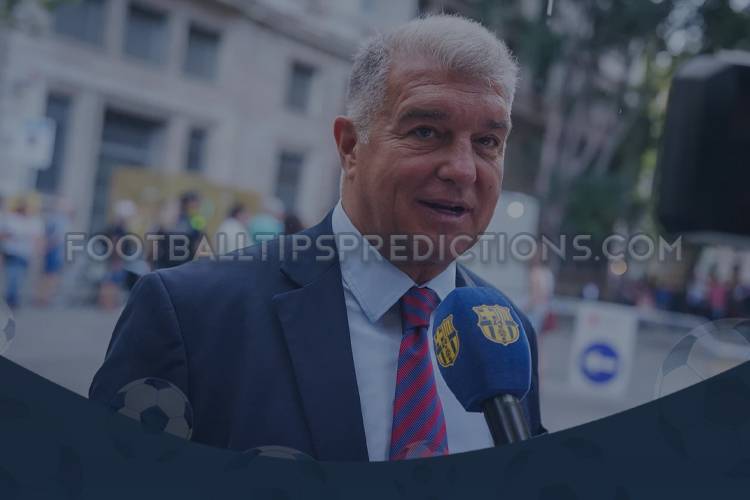
Joan Laporta criticises Real Madrid and considers filing a criminal complaint against Florentino Pérez after Barcelona's conciliation hearing ends without an agreement.
Joan Laporta Hits Back at Real Madrid as Barcelona Consider Criminal Complaint Against Florentino Pérez
The institutional dispute between FC Barcelona and Real Madrid has intensified after Joan Laporta delivered a strongly worded response to the ongoing accusations made by representatives of the Spanish capital club concerning the Negreira case. Speaking in Baku on Wednesday, November 25, 2026, shortly before a traditional meeting between the directors of Barcelona and Sabah ahead of their Champions League encounter, the Barcelona president made it clear that the Catalan club is prepared to pursue further legal action to protect its reputation and sporting history.
Laporta's comments came on the same morning that legal representatives of Barcelona and Real Madrid president Florentino Pérez were involved in a conciliation hearing in Madrid. The proceedings were intended to provide an opportunity for Pérez to retract controversial statements made earlier this year regarding Barcelona's sporting achievements during the period covered by the Negreira investigation.
The hearing subsequently concluded without an agreement between the parties, opening the possibility of further legal proceedings. Barcelona must now determine how to proceed, although Laporta has repeatedly indicated that the club is prepared to take the matter to court if it does not receive a satisfactory retraction.
Rather than attempting to reduce tensions between the two institutions, Laporta accused Real Madrid of repeatedly discussing Barcelona to divert attention away from their own affairs. The Catalan president even suggested, with considerable irony, that Barcelona might eventually have to demand royalties from their historic rivals for the amount of publicity they generate by constantly referring to the club.
The controversy represents another difficult chapter in the relationship between two of the most influential institutions in world football. While Barcelona and Real Madrid continue competing for domestic and European honours, their rivalry has increasingly extended beyond sporting matters, involving disagreements over refereeing, historical achievements, institutional responsibilities and legal proceedings.
Barcelona and Florentino Pérez Fail to Reach Agreement at Conciliation Hearing
The legal dispute reached an important stage on Wednesday morning when representatives of Barcelona and Florentino Pérez attended a conciliation hearing in Madrid. The proceedings followed a formal request submitted by the Catalan club in June after a series of public statements made by the Real Madrid president in connection with the Negreira case.
Barcelona's legal action concerns remarks made by Pérez during a press conference on May 12, 2026, when he announced presidential elections at Real Madrid, as well as comments made during a subsequent media interview. The Catalan club considers that those statements went beyond legitimate criticism and included serious allegations that damaged its reputation.
The purpose of the conciliation process was to give the parties an opportunity to resolve their disagreement without immediately proceeding to a criminal complaint. Barcelona wanted Pérez to retract the statements that the club considers false and damaging, while the Real Madrid president had the opportunity to clarify or defend his position through his legal representatives.
However, the hearing ended without a settlement, meaning that Barcelona must now assess the available legal options. The absence of an agreement does not automatically establish that either party has committed an offence, but it removes the possibility of resolving the dispute through this particular preliminary procedure.
Before the outcome became known, Laporta had already explained that Barcelona would not abandon its efforts to obtain a retraction simply because of the institutional importance of the person responsible for the statements.
"The conciliation hearing will take place today, and we will see what the outcome is. We will then decide what steps to take next. What we will certainly continue to do is defend Barcelona's interests and try to prevent them from making statements about the club that are not true," Laporta explained.
For Barcelona, the dispute is not merely a disagreement between two football executives. The club believes that the allegations made by Pérez affect the reputation of the institution, its former players, its supporters and the legitimacy of sporting achievements accumulated over an extended period.
With the conciliation process now concluded without an agreement, attention will turn towards the decision taken by Barcelona's legal department and whether the club proceeds with the criminal complaint it previously announced as a possibility.
Laporta Accuses Real Madrid of Being Obsessed With Barcelona
Beyond the legal implications of the dispute, Laporta used his appearance before the media in Azerbaijan to express considerable frustration with the manner in which Real Madrid continue discussing Barcelona during public institutional events. The Catalan president believes that his club has become an excessive subject of conversation for representatives of their historic rivals.
His remarks followed another Real Madrid general assembly in which Florentino Pérez addressed the Negreira case and reiterated his concerns regarding its implications for Spanish football. The continued references to Barcelona have clearly irritated Laporta, who argued that the Madrid president should dedicate greater attention to the management and sporting affairs of his own institution.
"We have a responsibility to defend Barcelona's interests. However, I can see that they are continuing along the same lines. They are obsessed with these issues because I suppose they want to divert attention away from other things that are not going so well for them," the Barcelona president stated.
Laporta's suggestion that Real Madrid are using the controversy to divert attention from other matters represents his interpretation of the situation rather than an established explanation for Pérez's conduct. The Real Madrid president has consistently presented his concerns about the Negreira case as questions relating to transparency, accountability and the integrity of Spanish football.
Nevertheless, Laporta believes that the frequency and nature of those public references have exceeded what he considers reasonable. He suggested that Real Madrid should concentrate on their own sporting objectives and administrative responsibilities rather than repeatedly directing criticism towards Barcelona.
"Instead of talking about Real Madrid, which is what they should be doing, focusing on themselves and leaving everyone else alone, they have to talk about Barcelona," he continued.
The comments illustrate the deterioration of institutional relations between the two clubs. Although Barcelona and Real Madrid have occasionally shared common interests on wider issues affecting European football, their positions regarding the Negreira investigation remain fundamentally opposed.
Laporta's latest intervention also demonstrates that he has no intention of remaining silent when he believes that public comments from rival institutions threaten Barcelona's reputation. His approach has been to combine a firm public response with the legal measures available to the club.
Barcelona President Jokes About Charging Real Madrid Royalties
One of the most striking moments of Laporta's appearance in Baku came when he suggested that Barcelona might eventually have to demand royalties from Real Madrid. The comment was delivered ironically, reflecting his belief that the Madrid club repeatedly uses Barcelona as a central subject of its public communications.
"We will end up asking for royalties because, in a way, they are promoting themselves at Barcelona's expense," Laporta said.
The remark quickly became one of the most notable elements of his media appearance. Although there is no indication that Barcelona intends to pursue any actual financial claim relating to royalties, the statement provided a clear illustration of the president's frustration with the continued discussion of his club by Real Madrid officials.
Laporta returned to the same argument when discussing the possibility of a criminal complaint, again accusing Madrid of using Barcelona to generate publicity and strengthen its own institutional message. His repetition of the joke suggested that he wanted to emphasise what he considers an excessive dependence on criticism of Barcelona.
The unusual reference to royalties also allowed Laporta to introduce humour into an otherwise serious discussion involving potentially significant legal consequences. While much of his appearance focused on protecting Barcelona through formal proceedings, the comment demonstrated his familiar willingness to employ provocative language when addressing the club's principal rival.
Throughout his time as Barcelona president, Laporta has frequently adopted an assertive communication style when confronted with criticism from Madrid. His latest remarks follow that established pattern, combining institutional arguments with statements designed to resonate with Barcelona supporters.
However, the underlying dispute remains considerably more serious than the humorous reference might suggest. The possibility of criminal proceedings against the president of Real Madrid means that the consequences could extend far beyond another public exchange between the two clubs.
Why Barcelona Are Considering a Criminal Complaint Against Florentino Pérez
Laporta also provided a detailed explanation of the legal strategy Barcelona have adopted in response to Pérez's statements. The president emphasised that the conciliation hearing was not intended as an isolated gesture but formed part of a process that could eventually result in a criminal complaint.
Barcelona's official announcement in June confirmed that the club had initiated the mandatory conciliation procedure preceding a potential criminal complaint for alleged slander under Article 205 of the Spanish Penal Code. The action was directed against Florentino Pérez personally in relation to his public statements, rather than representing a criminal complaint against Real Madrid as an institution.
Under Spanish law, the relevant offence concerns the attribution of a criminal act to another party when the accusation is made with knowledge of its falsity or reckless disregard for the truth. Whether those legal requirements are satisfied in this particular dispute would ultimately be a matter for the competent courts to determine.
Barcelona's position is that the Real Madrid president made statements that exceeded the boundaries of acceptable institutional criticism. The Catalan club believes that Pérez should either substantiate his allegations with evidence or withdraw the remarks that Barcelona considers damaging.
"The conciliation hearing is a preliminary step before filing a criminal complaint. What we have done is try to get them to retract their statements," Laporta explained.
The Barcelona president acknowledged that individuals can sometimes make inappropriate comments or express themselves excessively during public appearances. He argued that the conciliation process provided Pérez with a reasonable opportunity to reconsider his statements without requiring the dispute to advance further through the judicial system.
"Sometimes someone makes certain remarks and may be mistaken or go too far with their words. A conciliation hearing gives them the opportunity to correct and retract those statements," he added.
Laporta subsequently suggested that a refusal to withdraw the disputed remarks would reinforce Barcelona's determination to continue with the proceedings. However, his assessment regarding the intentions behind the statements represents the club's position and should not be confused with a judicial finding.
The lack of an agreement at Wednesday's hearing leaves Barcelona with the responsibility of deciding whether to initiate further legal proceedings. While the club has previously expressed its willingness to submit a criminal complaint, the formal presentation of that complaint and any subsequent court decision would constitute separate developments.
The Negreira Case Continues to Divide Spanish Football
At the centre of the dispute between Barcelona and Real Madrid is the continuing controversy surrounding payments made by the Catalan club to companies associated with José María Enríquez Negreira, a former vice-president of the Technical Committee of Referees in Spain. The case became public in 2023 and has since generated extensive debate regarding the administration of professional football in the country.
Investigators have examined payments amounting to approximately €7.5 million over a period extending from 2001 to 2018. The principal questions surrounding the investigation concern the purpose of those payments, the services provided and whether the financial relationship involved any unlawful attempt to influence sporting competition.
Barcelona have consistently maintained that the payments were related to technical reports and advisory services concerning referees. The club has denied purchasing favourable refereeing decisions or attempting to manipulate the outcome of matches and competitions.
Real Madrid, meanwhile, have maintained a critical position regarding the circumstances surrounding the payments. Pérez has repeatedly demanded that the investigation establish what occurred and whether the practices under examination affected the integrity of Spanish football.
The existence of the financial payments is not the same as proof that particular matches were manipulated or that championship results were unlawfully determined. Establishing any criminal responsibility requires a judicial assessment of the evidence, and the investigation itself should not be treated as a final finding of guilt.
That distinction is particularly important when considering Barcelona's separate dispute with Pérez. The Catalan club does not argue that the Negreira case should be exempt from investigation or public scrutiny. Its legal action instead challenges specific statements that Barcelona believes attributed unlawful conduct to the institution without sufficient justification.
As the original investigation continues through the Spanish judicial system, the separate proceedings involving Pérez introduce another legal dimension to an already complex controversy. The outcomes of the two matters will depend on their respective evidence and legal arguments rather than simply on the public positions adopted by Barcelona or Real Madrid.
Laporta Defends Barcelona Sporting Achievements and Historical Legacy
One of the principal concerns expressed by Laporta was what he regards as an attempt to undermine Barcelona's sporting history. The president believes that allegations questioning the legitimacy of previous championship victories affect not only the institution itself but also the generations of footballers, coaches and employees who contributed to those achievements.
During the years covered by the Negreira investigation, Barcelona experienced several of the most successful periods in their history. The club won numerous domestic titles and established itself as one of Europe's leading football institutions, particularly during the era in which Pep Guardiola managed a squad featuring Lionel Messi, Xavi Hernández, Andrés Iniesta and several other internationally recognised players.
Those achievements remain central to Barcelona's institutional identity. Laporta, who was president during part of that successful period, has repeatedly rejected suggestions that the club's performances should be explained by anything other than its sporting quality.
His criticism of Pérez therefore extends beyond the immediate legal disagreement. He considers the allegations a challenge to the reputation of a club whose achievements have been celebrated internationally and believes that Barcelona have a responsibility to defend the people associated with that success.
"This conciliation hearing was requested as a preliminary step towards filing a criminal complaint if they failed to retract a series of statements that were untrue and attempted to rewrite history through lies. And I am talking about the history of football," Laporta declared.
Those remarks encapsulate the seriousness with which the Barcelona president views the dispute. From his perspective, allowing accusations to circulate without an institutional response could contribute to an interpretation of the club's history that Barcelona fundamentally rejects.
Nevertheless, Barcelona's outstanding sporting performances during those years and the ongoing judicial investigation are distinct matters. The historical quality of the teams involved does not independently resolve the legal questions surrounding the payments, just as the existence of an investigation does not establish that particular sporting achievements were obtained unlawfully.
The challenge for the judicial authorities will be to assess the relevant evidence independently of the considerable emotions and institutional rivalry surrounding the case.
Florentino Pérez Continues to Demand Answers Over the Negreira Case
The latest confrontation between the two presidents comes only days after Florentino Pérez once again addressed the Negreira case during Real Madrid's general assembly on November 21. The Madrid president expressed concern about the reputational damage caused by the controversy and reiterated his desire for the circumstances surrounding the payments to be fully clarified.
Real Madrid have also brought the matter to UEFA's attention, extending the institutional dispute beyond Spanish football. Pérez believes that the seriousness of the questions raised by the investigation warrants scrutiny from both judicial and sporting authorities.
Barcelona, however, object to the manner in which certain accusations have been presented publicly. The Catalan club considers that there is an important difference between demanding clarification of the payments under investigation and suggesting that specific championship titles were obtained through unlawful means without establishing supporting evidence.
This distinction has become particularly significant following comments made by Pérez in May, when he suggested that Real Madrid had been deprived of several league titles. Those remarks contributed directly to Barcelona's decision to initiate the conciliation proceedings that concluded without an agreement on Wednesday.
The disagreement also raises wider questions concerning the responsibilities of senior football executives when addressing sensitive judicial matters. Statements made by the presidents of clubs with enormous international followings can influence public opinion, intensify tensions between supporters and generate significant reputational consequences.
While both institutions are entitled to defend their interests and express their positions regarding the ongoing investigation, the potential legal consequences of particular statements will ultimately depend on the applicable law and the evidence presented.
Barcelona Seek to Reduce Fermín López Suspension Following Villarreal Red Card
Although the confrontation with Real Madrid dominated Laporta's appearance before the media in Baku, the Barcelona president also addressed a more immediate sporting concern involving Fermín López. The midfielder faces a domestic suspension following his dismissal during Barcelona's dramatic 3-2 victory over Villarreal at the Spotify Camp Nou on Sunday, November 22.
Fermín experienced an eventful afternoon against Villarreal, playing an important role in Barcelona's second-half comeback before becoming involved in a controversial incident after being substituted. Despite no longer being on the pitch, the midfielder received a red card following a protest directed towards the match officials from the substitutes' bench.
The dismissal came during a particularly tense encounter in which Barcelona recovered from a two-goal deficit. Fermín had contributed to the comeback by scoring the equaliser, helping Hansi Flick's team maintain their position at the top of La Liga before his subsequent confrontation with the officials overshadowed his sporting contribution.
According to the referee's report, the midfielder left his position on the bench, approached the fourth official and protested loudly on several occasions. The disciplinary authorities must now determine how the incident should be classified and establish the corresponding punishment.
Barcelona have submitted arguments to the relevant disciplinary committee in an attempt to limit the suspension to a single match. The club believes Fermín's conduct should be assessed within the context of a highly competitive encounter and argues that the player did not directly insult the official.
Laporta confirmed that Barcelona had not received notification of the final disciplinary decision when he spoke in Azerbaijan. The president nevertheless made it clear that the club would use the appropriate procedures to defend its player and attempt to minimise the sporting consequences of the dismissal.
"I believe we have not yet received confirmation of the suspension. We do not know whether it will be one or two matches. We will once again act to defend Barcelona's interests and try to ensure that the suspension is as short as possible," Laporta explained.
The difference between a one-match and a two-match suspension could prove particularly significant given Barcelona's upcoming domestic schedule. A single-match suspension would mean Fermín misses the encounter against Deportivo de La Coruña, while a two-match punishment would also prevent him from participating in the important meeting with Atlético Madrid on December 2.
Laporta Explains Fermín Reaction During Tense Villarreal Encounter
The Barcelona president was keen to place Fermín's reaction within the emotional circumstances of Sunday's match. Barcelona had been forced to recover from a difficult situation against Villarreal, and the intensity of the encounter created several moments of frustration involving players and match officials.
Laporta revealed that the midfielder had spoken directly to representatives of the club about the incident, explaining what he had said and the circumstances surrounding his reaction. The president appeared satisfied that Fermín had not intended to insult the referee or the fourth official, although the disciplinary authorities must make their own assessment of the conduct described in the official report.
"These things happen during football matches. Fortunately, the referee is going to emphasise that Fermín did not insult him. Fermín explained to us yesterday what he had said, which was a reaction in the context of a football match, where there are moments of tension and these things happen," Laporta continued.
Barcelona's argument is therefore based on distinguishing between an emotional protest against a refereeing decision and conduct that could be classified as a more serious disciplinary offence. The club hopes that the circumstances surrounding the incident will be taken into consideration when the committee determines the appropriate sanction.
However, the absence of a direct insult does not necessarily mean that a suspension beyond one match can be ruled out. Spanish football's disciplinary regulations also provide for additional punishment in cases involving protests or inappropriate behaviour towards match officials.
The final outcome will depend on the committee's interpretation of the referee's report, Barcelona's submissions and the relevant disciplinary provisions. Until that decision is communicated, Flick must prepare for the possibility of being without Fermín for one or more domestic fixtures.
Hansi Flick Faces Selection Concerns Ahead of Important Domestic Fixtures
For Hansi Flick, the uncertainty surrounding Fermín's suspension represents another consideration during a demanding period of the season. Barcelona are competing for honours in several competitions, and maintaining the availability of important first-team players is particularly valuable when the fixture schedule becomes increasingly congested.
Fermín has developed into an influential member of Barcelona's squad because of his energy, attacking movement and ability to arrive in goalscoring positions from midfield. His willingness to press opponents and contribute to quick attacking transitions makes him particularly useful within Flick's tactical structure.
His goal against Villarreal provided another example of those qualities. Rather than operating exclusively as a traditional midfielder, Fermín regularly looks for opportunities to advance beyond opposition midfielders and exploit spaces close to the penalty area. That movement gives Barcelona an additional attacking threat and allows the team to create opportunities from different positions.
Losing the midfielder for the encounter against Atlético Madrid would therefore represent a more significant sporting setback than his absence from a single domestic fixture. Matches against Diego Simeone's team frequently require considerable patience and intelligent movement to overcome an organised defensive structure.
Flick has already acknowledged that Fermín's behaviour against Villarreal was inappropriate, while also suggesting that communication between players and match officials could be improved. The German coach's comments reflected a willingness to recognise responsibility on the part of his player without dismissing the broader issues that can contribute to confrontations during competitive matches.
Nevertheless, the domestic disciplinary proceedings do not prevent Fermín from participating in Barcelona's Champions League encounter against Sabah. The midfielder remains available for European competition, giving Flick the opportunity to utilise him in Azerbaijan while awaiting clarification regarding his domestic suspension.
Laporta Insists Barcelona Respect Referees and Football Authorities
Given the sensitive nature of the Negreira controversy and the wider debate surrounding refereeing in Spanish football, Laporta was also careful to emphasise Barcelona's respect for match officials. Although the club is attempting to reduce Fermín's punishment, the president insisted that challenging a particular disciplinary decision should not be interpreted as a rejection of the refereeing authorities.
"We respect the refereeing authorities, we respect referees and we believe they do the best they can. They act according to their own judgement, and sometimes their decisions may not coincide with our own views," Laporta stated.
His remarks arrive during a period in which the relationship between leading Spanish clubs and refereeing officials has attracted considerable attention. Controversial decisions, VAR interventions and public criticism from club representatives have contributed to an increasingly difficult environment in which officials frequently find themselves under intense scrutiny.
Laporta acknowledged that disagreements are inevitable within professional football, particularly when decisions can have significant consequences for the outcome of important matches. However, he maintained that Barcelona's response would remain within the established institutional and disciplinary procedures.
The Catalan club's position regarding Fermín is that defending a player's interests through formal submissions is compatible with respecting the authority of referees. Barcelona have therefore concentrated their efforts on presenting arguments to the disciplinary committee rather than attempting to establish the player's punishment through public statements alone.
Ultimately, the committee's decision will determine whether those arguments are sufficient to reduce the suspension. Barcelona must then decide whether to accept the punishment or pursue any further appeal available under the disciplinary regulations.
Barcelona Turn Attention to Champions League Responsibilities in Azerbaijan
Despite the considerable attention generated by Laporta's statements, Barcelona's presence in Baku is primarily related to their Champions League commitments. Hansi Flick's team travelled to Azerbaijan to face Sabah on the fifth matchday of the league phase, with the objective of collecting three points and strengthening their position in the European qualification race.
The encounter presents Barcelona with an opportunity to maintain momentum following their impressive domestic comeback against Villarreal. Although the Catalan giants possess considerably greater experience at Champions League level than their Azerbaijani opponents, Flick will be aware of the importance of approaching the match with appropriate concentration and avoiding unnecessary complications.
The demanding fixture schedule also provides the German manager with an opportunity to assess different combinations within his squad. With important domestic matches approaching and Lamine Yamal remaining in Barcelona because of ankle discomfort, the encounter against Sabah could offer additional playing time to several members of the squad.
Fermín's availability is particularly useful under those circumstances. Regardless of the eventual decision concerning his domestic suspension, the midfielder can contribute to Barcelona's European objectives and help maintain the attacking intensity that Flick expects from his players.
For Laporta, the trip to Azerbaijan also represents an opportunity to fulfil institutional responsibilities associated with Barcelona's international profile. The traditional meeting between the directors of both clubs forms part of the sporting and diplomatic relationships established around European fixtures.
However, the controversy involving Real Madrid inevitably dominated much of the attention surrounding the Barcelona president's appearance. Even thousands of kilometres away from Spain, the institutional rivalry between the country's two biggest football clubs remained a central subject of discussion.
Institutional Relations Between Barcelona and Real Madrid Continue to Deteriorate
The latest exchange between Laporta and Pérez illustrates how significantly the relationship between Barcelona and Real Madrid has changed in recent years. Although competition between the clubs has always extended beyond results on the pitch, the Negreira investigation has introduced a particularly sensitive legal dimension to their historic rivalry.
Disagreements between the two institutions have traditionally involved controversial refereeing decisions, transfer negotiations, financial strategies and competing interpretations of events throughout Spanish football history. The possibility of Barcelona pursuing criminal proceedings against the president of Real Madrid, however, represents a more formal and potentially consequential development.
Both clubs possess enormous influence within Spanish and international football, meaning their institutional disagreements frequently attract attention beyond their respective supporter bases. Statements made by either president can become the subject of extensive media coverage and contribute to wider discussions concerning the governance and integrity of the sport.
The situation also presents an interesting contrast with previous occasions when Barcelona and Real Madrid found common ground on matters affecting the wider European football landscape. Despite their historic sporting rivalry, both institutions have previously demonstrated a willingness to cooperate when they believed their interests were aligned.
The Negreira controversy has nevertheless created a fundamental disagreement that neither side appears prepared to abandon. Real Madrid continue demanding a full explanation of the payments under investigation, while Barcelona reject allegations that their sporting achievements were obtained through unlawful manipulation and insist on defending their reputation through legal channels.
Laporta's latest comments suggest that he does not consider another public exchange sufficient to resolve the situation. The unsuccessful conciliation hearing has now increased the possibility that the disagreement will continue through formal judicial proceedings, although the precise nature of Barcelona's next action remains to be confirmed.
Barcelona Must Decide Their Next Legal Step Following Failed Conciliation
With Wednesday's conciliation hearing concluding without an agreement, Barcelona's legal department now faces an important decision regarding the next stage of the dispute. The club has previously indicated that it would consider filing a criminal complaint against Florentino Pérez if the disputed statements were not satisfactorily withdrawn.
The Catalan institution must now evaluate whether to proceed with that course of action or pursue another legal avenue. Any subsequent proceedings would require the courts to examine the specific statements at issue, their context and whether they satisfy the legal requirements of the alleged offence.
Laporta's public intervention in Baku has left little doubt about his determination to defend Barcelona's interests. His criticism of Real Madrid, together with his ironic suggestion that the club should demand royalties for the repeated references to Barcelona, demonstrates the depth of his frustration with the continuing controversy.
At the same time, the Barcelona president must balance those institutional responsibilities with the club's immediate sporting priorities. The Champions League campaign, the defence of their domestic ambitions and the uncertainty surrounding Fermín López all require attention during an increasingly demanding period of the season.
For supporters of both clubs, the latest developments provide another reminder that the rivalry between Barcelona and Real Madrid is no longer confined to the football pitch. The outcome of the Negreira investigation and any separate legal proceedings involving Pérez could influence institutional relations between the two clubs for years to come.
What remains clear is that Laporta has no intention of allowing statements he considers damaging to Barcelona's reputation to go unanswered. With the conciliation process having failed to produce a settlement, the dispute between the two presidents has entered a new stage, potentially bringing one of Spanish football's most contentious institutional confrontations before the courts once again.
 England
 Spain
 Germany
 Italy
 France
 Uefa
 Netherlands
 Portugal
 Brazil
 Argentina
 Australia
 Austria
 Belgium
 Bulgaria
 Colombia
 Croatia
 Czech Republic
 Denmark
 Finland
 Greece
 Hungary
 Ireland
 Israel
 Japan
 Mexico
 Northern Ireland
 Norway
 Poland
 Romania
 Russia
 Scotland
 Slovakia
 Slovenia
 South Korea
 Sweden
 Switzerland
 Turkey
 Ukraine
 Usa