German FA opposes Infantino re-election
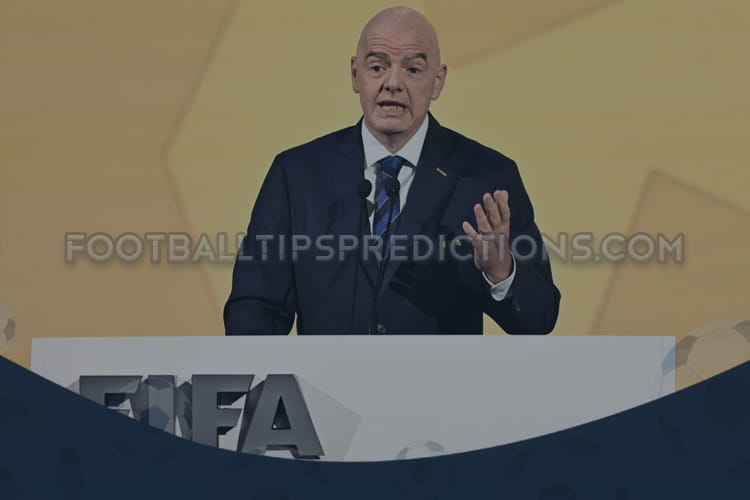
Germany has come out against Gianni Infantino re-election as FIFA president, with DFB chief Bernd Neuendorf saying trust in the current leadership is broken.
German FA opposes Infantino re-election as FIFA tensions deepen
The German Football Association has taken a clear position against Gianni Infantino remaining as FIFA president, with federation president Bernd Neuendorf saying that confidence in the current leadership of world football governing body has been fundamentally damaged. Neuendorf made his position public after attending meetings of the UEFA Executive Committee and the FIFA Council in Thessaloniki, Greece, and used unusually strong language to describe Germany growing dissatisfaction with the way FIFA has been governed. “It is important that the Infantino system is brought to an end,” Neuendorf told RTL/ntv, before adding that “the relationship of trust with Gianni Infantino and with the current FIFA leadership has clearly been destroyed.” The comments underline how far relations have deteriorated between the German federation and FIFA leadership and show that criticism of Infantino is no longer limited to disagreement over individual decisions, but has developed into a broader dispute over governance, consultation and the direction of the organisation.
Germany opposition comes after a period in which Infantino has faced increasingly strong criticism from sections of international football over the way major strategic decisions have been developed and presented. One of the central complaints has been that national federations and other important stakeholders have not always been sufficiently consulted before proposals with potentially major consequences for the structure and finances of the game were advanced. That frustration became particularly visible around plans involving the commercial exploitation of FIFA competitions, including the World Cup, and the possibility of placing revenues connected to those tournaments into a new commercial company that could be opened to private investors. Critics objected not only to the substance of the proposal but also to the process surrounding it, arguing that such a significant change should not have progressed without extensive discussion with national associations.
Commercial project became a major source of conflict
The proposed commercial structure became one of the clearest examples of the tension surrounding Infantino leadership. Under the initiative, revenues generated by major FIFA competitions were to be connected to a new company capable of attracting private investment, potentially changing the way some of the most valuable commercial assets in international football were managed. For national federations, the issue was significant because FIFA competition revenues ultimately play an important role in the financial ecosystem of the sport, including the money distributed through development programmes and other forms of support. The possibility that private investors could become involved in such a structure therefore immediately raised questions about control, transparency, long-term priorities and the extent to which football institutions would retain authority over revenues generated by their own competitions.
The controversy intensified because opponents argued that the federations themselves had not been properly consulted before the initiative advanced. That lack of prior discussion became almost as important as the proposal itself, with critics portraying it as evidence of a wider decision-making culture in which major projects could be developed without sufficient collective involvement. Infantino eventually withdrew the plan after the opposition became widespread, but that retreat did not fully resolve the problem. By the time the project was abandoned, the dispute had already damaged relationships and reinforced existing concerns about how FIFA leadership communicates with national associations and other governing bodies.
Withdrawal failed to restore confidence
Neuendorf latest comments suggest that cancelling the controversial project was not enough to rebuild trust. From the German FA perspective, the disagreement appears to have moved beyond one abandoned initiative and developed into a broader question about whether the existing leadership can still command the confidence required to continue running world football. His statement that the relationship of trust has been “destroyed” is particularly significant because cooperation between FIFA and national federations depends heavily on the ability of those organisations to work together on competitions, regulations, development programmes and major strategic decisions. A disagreement over policy can normally be resolved through negotiation, but a breakdown in trust presents a more fundamental problem because it affects how future proposals are received even before their details are discussed.
That is why the German federation position on Infantino re-election is important. Neuendorf is not merely asking FIFA to reconsider a specific policy or provide greater explanation for one decision. He is arguing that the current model of leadership itself should come to an end. His reference to the “Infantino system” suggests that the criticism is aimed at the broader way in which FIFA has operated under its president rather than at a single episode. It also indicates that the German FA believes the controversies surrounding consultation and governance cannot simply be resolved through minor adjustments while the same leadership structure remains in place.
Germany adds weight to growing FIFA governance debate
The German federation carries considerable influence within European football, making such a public intervention particularly notable. Germany is one of the largest and most historically significant football nations, and its national association plays an important role within both UEFA and FIFA structures. Neuendorf decision to make his criticism public after participating in meetings involving both organisations therefore adds further weight to the debate surrounding Infantino future. The remarks also suggest that dissatisfaction is being discussed not only through media statements but within the formal institutions responsible for governing European and world football.
For FIFA, the challenge is that controversy over one project can quickly become part of a much broader narrative when several concerns accumulate. The commercial company proposal may have been withdrawn, but the reaction to it appears to have reinforced previous frustrations about transparency and consultation. Once stakeholders begin to believe that they are being presented with major decisions rather than being involved in shaping them, every subsequent initiative risks being interpreted through the same lens. That makes restoring confidence more difficult, particularly when influential national federations begin publicly questioning whether the existing leadership should continue.
Neuendorf criticism goes beyond one policy dispute
The tone of Neuendorf intervention is also striking. Football officials frequently disagree over competition formats, financial distribution or regulatory matters without directly challenging the legitimacy of an entire leadership approach. In this case, however, the German FA president has openly linked the governance concerns to Infantino continued position at the head of FIFA. By saying that the system associated with the president should end, Neuendorf has turned a policy disagreement into a clear position on FIFA leadership. That raises the stakes considerably because it means future discussions will not simply concern whether individual projects should be approved, changed or abandoned, but whether Infantino should receive continued support from important member associations.
The abandoned commercial initiative remains central to understanding that shift. The proposal involved issues that go directly to the heart of FIFA financial model, and any attempt to involve private capital in revenues connected to flagship competitions was always likely to require broad support. Once resistance emerged, Infantino decision to withdraw the plan prevented the confrontation from escalating further at that moment, but it did not erase the way the project had been introduced. For critics, the process itself became evidence of a governance problem. Neuendorf comments indicate that Germany now views the episode as part of a pattern rather than an isolated mistake.
FIFA faces challenge of rebuilding relations
The situation leaves FIFA with a significant relationship-management problem. Even when controversial proposals are withdrawn, the organisation still needs the cooperation of national federations to organise tournaments, implement rules and maintain the broader international football structure. If influential associations believe that their views are not being heard, resistance can spread from individual policies to the leadership itself. That is precisely the development reflected in the German FA position. What began as criticism of the way certain decisions were made has now become open opposition to Infantino re-election.
For Neuendorf, the issue is therefore one of institutional confidence as much as individual leadership. His remarks suggest that Germany wants a model in which federations are consulted earlier and more meaningfully before major commercial or structural decisions are taken. Whether that requires a different president, a different governance culture or both is the central question now raised by the German position. What is clear is that the withdrawal of the controversial commercial project has not been sufficient to close the dispute.
The latest intervention adds another chapter to an increasingly difficult period for Infantino relationship with parts of European football. FIFA president avoided one immediate confrontation by abandoning the proposed commercial company, but the political damage within football governance appears to have lasted beyond the project itself. Germany, through Neuendorf, is now publicly saying that confidence has been lost and that the current system should end. Unless relations improve substantially, the debate over FIFA future leadership is likely to remain tied not only to individual decisions but to the larger question of how much consultation, transparency and shared authority national federations expect from the organisation that governs the global game.
 England
 Spain
Spain Germany
 Italy
Italy France
 Uefa
Uefa Netherlands
 Portugal
 Brazil
 Argentina
 Australia
 Austria
 Belgium
 Bulgaria
 Colombia
 Croatia
 Czech Republic
 Denmark
 Finland
 Greece
 Hungary
 Ireland
 Israel
 Japan
Japan Mexico
 Northern Ireland
 Norway
 Poland
 Romania
 Russia
 Scotland
 Slovakia
 Slovenia
 South Korea
 Sweden
 Switzerland
 Turkey
 Ukraine
 Usa
Usa