FC Porto close in on Chris Smalling as transfer talks advance
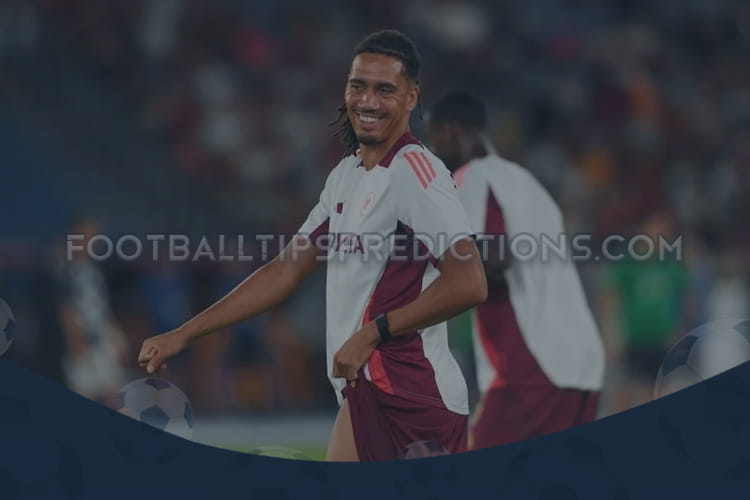
FC Porto are in advanced talks with Chris Smalling, according to several Portuguese sources and the BBC. The 36-year-old centre-back is available on a free transfer after leaving Saudi Arabian club Al-Fayha last summer.
FC Porto close in on Chris Smalling as talks reach advanced stage
FC Porto are moving closer to securing the signing of former Manchester United and AS Roma defender Chris Smalling, with negotiations between the Portuguese club and the experienced English centre-back reportedly at an advanced stage. Several Portuguese media outlets suggest that an agreement in principle has already been reached between the parties, although the BBC has adopted a more cautious position, reporting that discussions are progressing without indicating that the deal has been finalised. The potential arrival of the 36-year-old would give Porto another experienced defensive option as they look to strengthen their squad for the challenges ahead.
Smalling is currently available on a free transfer after leaving Saudi Arabian club Al-Fayha during the summer. His last competitive appearance came in May, meaning that he has been without regular match action for several months. That lack of competitive rhythm will be one of the factors Porto need to consider, but the opportunity to recruit a defender with extensive experience in the Premier League, Serie A and European competitions makes the potential deal an interesting option for the Portuguese giants.
The Englishman would arrive with a substantial collection of domestic and international honours, having represented Manchester United for much of his career before establishing himself in Italian football with Roma. At Porto, however, his reputation alone would not guarantee a starting position. Jan Bednarek and Jakub Kiwior currently form the established central defensive partnership, and Smalling would have to compete with both players for a place in the team.
Negotiations progress towards a possible agreement
The latest reports from Portugal suggest that the main elements of the proposed agreement have already been discussed and that the parties are broadly aligned on the terms of a potential move. The BBC, meanwhile, has described the situation as advanced negotiations, indicating that Porto remain well placed to complete the signing but that the transfer should not yet be treated as official.
Smalling status as a free agent makes the operation more straightforward than a conventional transfer. Porto would not need to negotiate a transfer fee with another club, allowing discussions to focus primarily on the contractual agreement and the practical arrangements surrounding the defender arrival. That flexibility could be particularly useful for a club seeking to reinforce its squad outside the main transfer window.
The potential signing would represent a different approach from investing in a younger defender with long-term development and resale potential. At 36, Smalling would be recruited primarily for his experience, leadership and ability to contribute immediately once he has recovered sufficient match fitness. His background at Manchester United and Roma means he is already familiar with the demands of playing for clubs where results are expected every week.
However, Porto will also have to assess his physical condition carefully. Having played his last competitive match in May, Smalling may require a period of adaptation before he is ready to cope with the intensity of regular football. Even an experienced professional can find it challenging to return immediately to competitive action after several months without matches, particularly in a position where timing, concentration and coordination with teammates are essential.
Manchester United years established Smalling reputation
Smalling is best known for his long association with Manchester United, where he developed into an established Premier League defender and gained experience competing for major honours. After making his breakthrough at Fulham in 2009, he attracted the attention of United and went on to make 323 appearances for the club across nine seasons.
His time at Old Trafford coincided with several different periods in the history of Manchester United, including the final years of Sir Alex Ferguson and the managerial changes that followed. Playing under different coaches exposed him to a variety of tactical approaches and defensive systems, requiring him to adapt to changing expectations while competing for a place in one of the most closely scrutinised teams in English football.
The English defender also developed a reputation for his physical presence and ability to compete in aerial situations. His height makes him a potentially useful option when defending crosses, dealing with direct attacking play and contesting set pieces. Those qualities, combined with his experience of high-pressure matches, are among the characteristics that could make him an attractive addition to Porto defensive department.
During his Manchester United career, Smalling won two Premier League titles, the FA Cup, the League Cup, three Community Shields and the Europa League. His collection of honours reflects the level of competition in which he has operated and the experience he accumulated during his years in England.
The Europa League triumph was particularly significant because it added a major European trophy to his achievements. For Porto, who regularly have ambitions beyond domestic competition, recruiting a player familiar with the demands of European knockout football could provide another valuable source of experience within the squad.
A successful second chapter with AS Roma
Smalling eventually left Manchester United for AS Roma, initially joining the Italian club on loan before the move became permanent in 2020. The transfer represented an important change in his career, taking him from the Premier League to Serie A and introducing him to a different tactical environment.
Italian football has traditionally placed considerable emphasis on defensive organisation, positional awareness and the management of space. Smalling adapted to those demands and established himself as an important member of the Roma squad, demonstrating that his qualities could be effective outside the English game.
His time in Italy also brought another European honour. During the 2021/22 season, Roma won the inaugural UEFA Europa Conference League, defeating Feyenoord in the final. The victory was particularly memorable because it marked a major continental achievement for the Italian club and added another significant trophy to Smalling career.
The final against Feyenoord also underlined his experience of competing against strong European opposition. That background could be particularly relevant at Porto, where the demands of domestic football must frequently be balanced with European commitments and where the defensive department needs to maintain consistency across different competitions.
His period at Roma demonstrated that he could successfully adapt to a new country, language and footballing culture after spending so many years in England. If the proposed move to Porto is completed, the transition to Portuguese football will represent another chapter in an already extensive European career.
England experience adds to his credentials
Smalling has also represented England at senior international level, earning 29 caps for his country. Playing international football provided another dimension to his development, exposing him to different styles of opposition and the demands associated with representing a national team.
Although his international career is no longer an immediate consideration, those appearances remain an important part of his professional background. Very few players reach their mid-thirties having accumulated experience in the Premier League, Serie A, European club competitions and international football.
That combination could prove valuable for Porto beyond the minutes Smalling eventually plays. Experienced defenders often contribute through communication, organisation and the ability to anticipate difficult situations. They can also help younger teammates by sharing knowledge acquired over many seasons at the highest level.
For a team competing under constant pressure to achieve results, such qualities can be particularly useful during demanding periods of the campaign. Smalling would not need to be an automatic starter to make a contribution, especially if his presence allows the coaching staff to manage the workload of other central defenders more effectively.
Competition with Bednarek and Kiwior awaits
One of the most interesting aspects of the potential transfer concerns the role Smalling would occupy within the Porto squad. The established central defensive partnership currently consists of Jan Bednarek and Jakub Kiwior, meaning the Englishman would arrive knowing that he must compete for playing time rather than expect an immediate place in the starting eleven.
Both defenders already provide Porto with an established structure in the centre of defence, and introducing another experienced player would increase the options available to the coaching staff. Smalling could be considered for individual matches, provide cover when injuries or suspensions occur, or be used as part of a broader rotation strategy during periods of fixture congestion.
The addition of another centre-back would also create greater competition in training. Bednarek and Kiwior would have to maintain their performances to protect their positions, while Smalling would have an opportunity to demonstrate that his experience and defensive qualities still make him capable of competing at a high level.
There is also a tactical dimension to the potential arrival. Different opponents require different defensive approaches, and having several centre-backs available allows a coach to make adjustments depending on the type of attacking threat the team is expected to face. Smalling physical presence and experience of defending in different systems could provide an alternative to the existing partnership when necessary.
Nevertheless, the most immediate priority would be ensuring that the English defender reaches the required physical level. His last competitive appearance came in May, and Porto would need to manage his integration carefully before expecting him to perform regularly.
Physical preparation will be an important factor
At 36, Smalling remains a player with an extensive professional background, but his age and recent absence from competitive football are relevant considerations. The demands placed on central defenders extend far beyond simply maintaining positional discipline. They must react quickly to changes in possession, cover space behind the defensive line and compete in repeated physical duels throughout a match.
A defender returning after several months without regular competition may need time to regain the timing and intensity required at the highest level. Training can help maintain physical condition, but it cannot completely reproduce the pressure and unpredictability of competitive football.
Porto would therefore have to decide how quickly Smalling could realistically become available for selection. His experience could help him adapt to the tactical requirements of the team, but the physical side of his preparation would still need careful management.
The club would also benefit from avoiding unnecessary pressure on a potential new signing. With Bednarek and Kiwior already established, Porto would have the opportunity to introduce Smalling gradually rather than immediately placing him in a position where he must play every match.
A career that began at Fulham and reached European success
Smalling journey through professional football has been considerable. His breakthrough at Fulham in 2009 provided the platform for a move to Manchester United, where he spent the most recognisable period of his career and accumulated a substantial collection of domestic honours.
His subsequent move to Roma demonstrated that he could continue performing at a high level outside England, while the Conference League victory against Feyenoord added another European achievement to his record. More recently, his spell with Al-Fayha took him to Saudi Arabian football before he became a free agent during the summer.
A move to Porto would therefore give him experience in another major European football market. The Portuguese club have a strong international reputation and a history of competing in continental competitions, making the potential transfer an attractive opportunity for a player who has spent much of his career representing ambitious teams.
From Porto perspective, the attraction is equally understandable. Few free agents offer Smalling combination of Premier League experience, European honours and international appearances. Although his age limits the long-term nature of the investment, his availability creates an opportunity to add an established defender without committing to a transfer fee.
Porto look to reinforce their defensive options
The reported negotiations suggest that Porto are seeking to increase their defensive depth rather than simply replace one of their existing starters. With Bednarek and Kiwior forming the established partnership, Smalling could provide an additional layer of security during a demanding season.
Squad depth becomes particularly important when clubs are involved in several competitions, as the accumulation of matches can increase the risk of fatigue and physical problems. A defender with Smalling experience could allow the coaching staff to rotate when necessary while maintaining an established level of quality within the squad.
His arrival could also be useful in situations where the team needs additional defensive experience during the closing stages of matches. Players who have spent years competing in high-pressure environments can offer composure and leadership when protecting narrow advantages or responding to difficult periods.
However, Porto will have to balance those potential benefits against the fact that Smalling has not played competitively since May. The immediate impact of the transfer will depend on his current condition, his adaptation to the squad and the role the coaching staff believe he can fulfil.
Agreement appears close but remains unconfirmed
For now, the strongest indication is that negotiations are progressing towards a possible agreement. Portuguese reports suggest that the parties have already reached an understanding in principle, while the BBC continues to describe the discussions as advanced. The difference between those accounts means that the transfer should still be regarded as a developing situation rather than a completed deal.
If an agreement is finalised, Smalling would arrive in Porto with a wealth of experience and the opportunity to begin another chapter of his career after leaving Al-Fayha. The move would also provide the Portuguese club with an established option capable of competing with Bednarek and Kiwior for a place in central defence.
The Englishman has already demonstrated his ability to adapt to different environments during spells in England, Italy and Saudi Arabia. Portugal would represent another challenge, but one that could allow him to return to European club football and potentially add further appearances to a career filled with major domestic and continental achievements.
Porto, meanwhile, would gain a defender whose reputation has been built over many years at some of Europe most recognisable clubs. The immediate question is whether the final details of the agreement can be completed and how quickly Smalling could be ready to contribute. With talks reportedly at an advanced stage, his potential arrival is now one of the most interesting developments surrounding the Portuguese club defensive planning.
 England
 Spain
Spain Germany
 Italy
Italy France
 Uefa
Uefa Netherlands
 Portugal
 Brazil
 Argentina
 Australia
 Austria
 Belgium
 Bulgaria
 Colombia
 Croatia
 Czech Republic
 Denmark
 Finland
 Greece
 Hungary
 Ireland
 Israel
 Japan
Japan Mexico
 Northern Ireland
 Norway
 Poland
 Romania
 Russia
 Scotland
 Slovakia
 Slovenia
 South Korea
 Sweden
 Switzerland
 Turkey
 Ukraine
 Usa
Usa