Dani Olmo ruled out of El Clasico as Barcelona confirm month-long injury
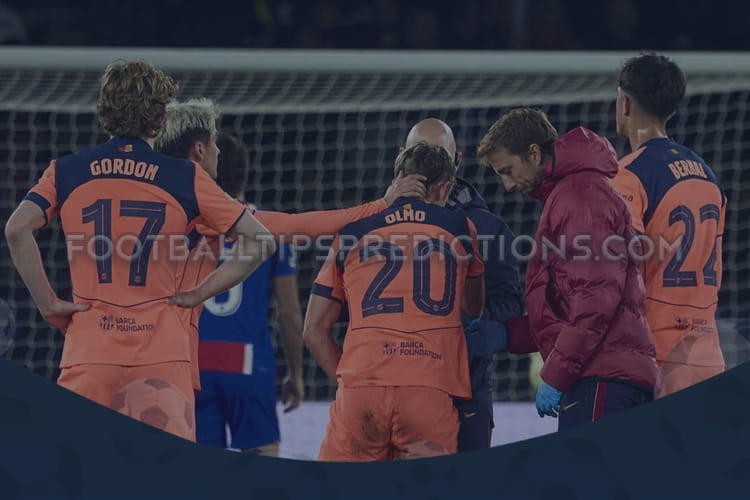
Dani Olmo faces 1 month out with an adductor injury, ruling him out of Barcelona's El Clasico against Real Madrid and key Champions League fixtures.
Barcelona suffer major Dani Olmo injury blow ahead of Real Madrid clash as midfielder faces month on sidelines
Barcelona have suffered a significant setback ahead of Sunday's highly anticipated El Clásico against Real Madrid, with Spanish international Dani Olmo ruled out for approximately 1 month after sustaining a muscle injury during the Champions League defeat to Paris Saint-Germain. The Catalan club confirmed on Wednesday that medical examinations revealed damage to the midfielder's left adductor muscle, leaving manager Hansi Flick without one of his most important attacking options during a demanding period of the season.
Olmo suffered the injury following a collision with an opposition player during Barcelona's 4-2 defeat in Paris, a result that brought further disappointment for the reigning Spanish champions. The 27-year-old midfielder was forced to leave the pitch in the 27th minute, and subsequent examinations confirmed that the problem would prevent him from returning to competitive action for several weeks.
The timing could hardly be more frustrating for Barcelona. With Real Madrid waiting in La Liga, another Champions League fixture approaching and important domestic encounters against Alavés and Atlético de Madrid on the schedule, Flick must now reconsider his attacking midfield options at a stage when squad depth and tactical flexibility are particularly important.
Olmo's absence will also affect the Spanish national team, with the midfielder expected to miss November's international fixtures against the Czech Republic and England. Although Barcelona have provided an initial recovery estimate of approximately 1 month, his eventual return will depend on how the injury responds to treatment and rehabilitation.
Barcelona confirm Dani Olmo suffered left adductor injury against PSG
Barcelona announced the diagnosis on Wednesday after Olmo underwent medical examinations following the Champions League encounter at the Parc des Princes. The club confirmed that the Spanish international had sustained an injury to his left adductor muscle as a consequence of a collision during the match.
"Medical examinations carried out today have confirmed that Dani Olmo has sustained an injury to his left adductor muscle following a collision with an opponent during the match against Paris Saint-Germain. The player is expected to be sidelined for approximately 1 month," Barcelona explained in an official statement published on social media.
The announcement provided clarity over an incident that had already raised concerns during the match. Olmo was unable to continue beyond the 27th minute, forcing Barcelona to make an early adjustment to their plans against the French champions.
Losing a player so early in a Champions League encounter presents an immediate tactical problem. Managers prepare specific combinations, positional responsibilities and attacking movements in the days leading up to a major European fixture. When an important midfielder is removed during the opening stages, the team must adapt before those plans have had sufficient time to develop.
Olmo's departure was particularly unfortunate because of his importance to Barcelona's attacking structure. The Spanish international has been among the players most frequently used by Flick, reflecting the manager's confidence in his ability to connect midfield possession with attacking movement.
Although Barcelona have established an estimated recovery period, the club has not provided a detailed medical classification of the injury or a confirmed date for his return. The initial prognosis therefore offers an indication of the expected absence rather than a guarantee that Olmo will be ready to play after exactly 1 month.
For now, the immediate priority is ensuring that the midfielder recovers sufficiently before resuming competitive football.
Dani Olmo injury compounds disappointment of Barcelona's 4-2 defeat in Paris
Barcelona's Champions League visit to Paris Saint-Germain was already a difficult evening before the full extent of Olmo's injury became clear. The Catalan side suffered a 4-2 defeat in the third round of the league phase, leaving Flick with both a disappointing result and an important injury concern to address.
The loss of Olmo in the first half added another complication to an encounter against opponents with considerable attacking quality. Barcelona were forced to adjust their midfield organisation while attempting to compete against one of Europe's strongest teams.
In matches of this magnitude, continuity within the starting lineup can make a considerable difference. A midfielder capable of finding space between opposition lines and helping attacking players combine is often central to the team's ability to establish rhythm in possession.
Removing that player can affect several aspects of the performance simultaneously. The positions occupied by teammates may change, passing options can become less familiar, and the distribution of defensive responsibilities may require adjustments.
That does not mean Olmo's injury alone explains Barcelona's defeat. The 4-2 result must be considered separately from the medical setback, and there is no basis for suggesting that his continued involvement would necessarily have changed the outcome.
However, his early withdrawal undoubtedly reduced Flick's options during an important European fixture and created a new problem for the matches immediately ahead.
The challenge now is to prevent the disappointment in Paris from influencing Barcelona's preparations for Real Madrid. With the next major encounter arriving quickly, the coaching staff must address both the consequences of the defeat and the tactical adjustments required by Olmo's absence.
Dani Olmo officially ruled out of El Clasico against Real Madrid
The most immediate consequence of Barcelona's medical announcement is that Olmo will miss Sunday's El Clásico against Real Madrid. The midfielder's expected recovery period makes him unavailable for one of the most closely followed fixtures in European football.
His absence is particularly significant because matches between Barcelona and Real Madrid frequently demand exceptional technical quality, concentration and tactical intelligence. Both teams possess the ability to punish defensive mistakes, and the battle for control of midfield can have a considerable influence on the overall contest.
Olmo offers Barcelona an attacking option capable of operating in advanced central positions, receiving possession in tight spaces and supporting the forwards with intelligent movement. His qualities can be valuable when facing an opponent that places considerable pressure on the ball and attempts to restrict passing options through the middle.
Against Real Madrid, Barcelona must now find alternative ways to create those connections.
Flick has several possible tactical responses, although the precise solution will depend on the availability and condition of the remaining squad members. The manager could maintain his preferred structure and select another player to occupy Olmo's attacking midfield role, or he could adjust the distribution of responsibilities between midfield and attack.
Either approach requires careful preparation. Replacing a midfielder is not simply a question of introducing another technically gifted footballer. The substitute must understand when to move into attacking positions, when to support possession and how to contribute to the team's defensive organisation.
Those responsibilities become especially important in El Clásico, where transitions and positional mistakes can quickly create dangerous situations.
Barcelona will also have to manage the emotional demands of the occasion. Losing an important player shortly before a major rivalry fixture is frustrating, but Flick must ensure that the focus remains on the footballers available for selection rather than those unable to participate.
The Spanish champions still have an opportunity to respond to their European disappointment, although they will have to do so without a midfielder who has become a regular part of their plans.
Why Dani Olmo is so important to Hansi Flick's Barcelona
Olmo's importance to Barcelona extends beyond his position on the team sheet. The Spanish international brings a combination of technical ability, positional awareness and creativity that allows him to contribute in several different attacking situations.
One of his most valuable characteristics is his ability to operate between midfield and the forward line. Rather than remaining fixed in a single area, Olmo can move into pockets of space where he becomes available to receive passes and help Barcelona progress towards the opposition penalty area.
Those movements can create difficult decisions for defenders. Following an attacking midfielder away from a defensive position may open space elsewhere, while allowing him to receive the ball can create opportunities for combinations with teammates.
Olmo is also capable of participating in quick passing sequences around the penalty area, an important quality for a Barcelona team that often needs to overcome compact defensive structures.
His technical ability allows him to contribute when matches become congested, while his understanding of attacking movement provides additional possibilities for teammates attempting to penetrate defensive lines.
Flick's frequent use of the midfielder suggests that he values those characteristics within his tactical approach. Olmo can help provide a link between deeper possession and the forwards, reducing the distance between different areas of the team.
Without him, Barcelona may need to redistribute that creative responsibility.
Another midfielder might become more involved in advanced positions, while the forwards may have to contribute more frequently to combinations outside the penalty area. Full-backs and wide players could also assume greater responsibility for helping the team progress through attacking situations.
These adjustments are possible, but they require coordination. Barcelona's challenge is not necessarily to reproduce every aspect of Olmo's game through a single replacement, but to ensure that the collective structure continues functioning effectively.
Hansi Flick faces difficult selection decisions after latest injury setback
For Hansi Flick, Olmo's injury introduces another important decision at a particularly demanding stage of the campaign. Barcelona must prepare for matches with different tactical characteristics while managing the absence of a player who has featured prominently in the manager's plans.
The immediate challenge concerns Sunday's meeting with Real Madrid, but the implications extend into the following weeks. With Olmo unavailable for approximately 1 month, Flick must identify a solution that can provide consistency across several fixtures rather than focusing exclusively on El Clásico.
There are different ways to compensate for the absence of an attacking midfielder. A direct positional replacement would preserve the general shape of the team, allowing the remaining players to continue operating in familiar areas.
Alternatively, the manager could adjust the balance of midfield to provide greater control of possession, relying on attacking players to contribute more movement and creativity in the final third.
Both approaches have potential advantages and limitations.
Maintaining an attacking structure similar to the usual system may preserve continuity, but the replacement must be comfortable assuming Olmo's responsibilities. A more cautious midfield configuration could improve defensive security, although it might require different methods of creating chances.
Much will depend on the opponents. The requirements of facing Real Madrid are not necessarily identical to those of playing Alavés or Aston Villa, and Flick may consider different combinations according to the demands of each match.
Barcelona's coaching staff must also evaluate the physical condition of the players available. During a congested period, squad rotation becomes an important factor in maintaining performance levels and reducing excessive workloads.
Olmo's absence removes one option from that process, potentially increasing the responsibility placed on other members of the squad.
Barcelona must prepare for crucial La Liga matches without Olmo
Although El Clásico will attract most of the immediate attention, Barcelona's injury problem extends to other important domestic fixtures. The club expects Olmo to miss the encounters against Alavés and Atlético de Madrid during his recovery period.
Those matches present different challenges, requiring Barcelona to remain adaptable without one of their established midfield options.
Against teams that defend with considerable organisation, the ability to create opportunities through central areas can become particularly important. Players must show patience in possession while recognising the moments when quicker combinations or changes of position can destabilise the opposition.
Olmo's absence may therefore influence how Barcelona approach periods of sustained possession. The team will need alternative sources of creativity and effective movement to prevent attacks from becoming predictable.
The meeting with Atlético de Madrid also carries significant competitive interest. Fixtures between leading La Liga clubs are often decided by narrow margins, and the absence of an influential midfielder reduces the number of options available to the coaching staff.
However, injuries are an unavoidable challenge during a long season. Clubs competing domestically and in Europe must possess enough depth to respond when important players become unavailable.
Barcelona's ability to maintain their performance levels during Olmo's recovery will provide an indication of how effectively Flick can manage the squad across different competitions.
The objective will be to continue collecting important results without placing unnecessary pressure on the injured midfielder to return ahead of schedule.
Aston Villa Champions League clash also affected by Dani Olmo absence
Barcelona's next European commitments will also be influenced by the injury. Olmo is expected to miss the Champions League encounter against Aston Villa, depriving Flick of another attacking option as the club attempts to recover from its defeat in Paris.
The expanded Champions League format places considerable importance on collecting points consistently throughout the league phase. Every match contributes to the overall standings, with the leading teams progressing directly to the round of 16 and others facing the possibility of additional knockout play-off fixtures.
Barcelona's 4-2 defeat against PSG makes their response in the following European match particularly important. While an early setback does not determine the outcome of the competition, maintaining momentum is valuable when the objective is to finish as high as possible.
Aston Villa will present another opportunity for Barcelona to demonstrate their ability to compete against strong European opposition, but Flick must now prepare without one of his regular midfield choices.
The tactical challenge could be different from the one faced in Paris. Barcelona may need to respond to variations in pressing intensity, defensive organisation and attacking transitions, making versatility within the squad particularly valuable.
Olmo's ability to receive possession between the lines and connect midfield with attack would ordinarily offer an additional solution in those situations.
Without him, the responsibility will fall on the available players to maintain attacking balance while protecting the team against turnovers in dangerous areas.
The Champions League calendar leaves limited room for prolonged disappointment, and Barcelona must ensure that the injury does not become a continuing distraction during their preparation.
Spain also lose Dani Olmo for November international fixtures
The consequences of Olmo's injury extend beyond Barcelona, with the Spanish national team also set to be affected during November's international period.
The midfielder is expected to miss Spain's upcoming matches against the Czech Republic and England, removing an experienced and technically accomplished option from the national team's attacking midfield choices.
For Spain, Olmo provides versatility and an ability to contribute to possession-based football. His movement between the lines and understanding of attacking combinations can be valuable when attempting to create opportunities against organised international opponents.
The absence will require the national team coaching staff to consider alternative selections, although no replacement has been confirmed in the information released about his injury.
From Barcelona's perspective, the international period could provide additional time for recovery. The precise value of that break will depend on Olmo's rehabilitation progress and the medical guidance followed by the player and club.
It would be premature to assume that he will be available immediately after the November fixtures. The official estimate remains approximately 1 month, and recovery timelines for muscle injuries can vary.
Both Barcelona and Spain will want the midfielder to return in suitable physical condition rather than risk aggravating the problem through an early comeback.
What is an adductor injury and how could it affect Olmo?
Barcelona's medical statement identified the affected area as Olmo's left adductor muscle, which is part of a group of muscles on the inner side of the thigh. These muscles contribute to movements involving the legs, including changes of direction and actions that require control and stability.
For professional footballers, the adductors are involved in a wide variety of movements. Acceleration, rapid directional changes, striking the ball and defending in one-on-one situations can all place demands on the muscles around the hip and upper thigh.
That makes injuries in this area especially relevant for attacking midfielders, whose roles frequently require quick changes of movement and technical actions under pressure.
Barcelona attributed Olmo's injury to a collision with an opponent during the PSG encounter. The club has not publicly established a detailed injury grade in the statement provided, meaning it would be inappropriate to assume the precise extent of the tissue damage or the treatment required.
The recovery process for a muscle injury generally depends on several factors, including the severity of the problem, the player's symptoms and the response to rehabilitation.
Returning to normal daily movement does not necessarily mean that a footballer is immediately ready for competitive matches. Professional players must be able to perform demanding actions repeatedly and without significant restriction before being considered suitable for full participation.
For Olmo, the main objective will be to recover sufficiently to resume the movements and physical demands associated with his position.
Barcelona's initial 1-month estimate offers a reasonable indication of when the club hopes to have him available again, but the medical staff will need to assess his progress before confirming any return to training or match selection.
Barcelona must avoid rushing Olmo back from injury
The importance of the coming fixtures may increase the temptation to focus on when Olmo can return, but muscle injuries require careful management. Even when a player begins feeling better, recovering the capacity to perform repeated high-intensity football movements can take additional time.
For a team competing in La Liga and the Champions League, having an important player available is clearly valuable. However, returning before full readiness could expose the player to additional physical demands at a stage when recovery remains incomplete.
Barcelona have not announced a fixed comeback date, and the estimated absence should be understood as provisional.
The club will need to evaluate how Olmo responds to the recovery process before gradually increasing his football activity. The precise programme has not been disclosed, and there is no confirmed timetable for his return to full training.
Once the midfielder is ready to resume competitive action, Flick may also have to consider how quickly he can return to his usual workload. A player's availability for selection and readiness to complete an entire match are not necessarily identical.
Those decisions will become clearer as the rehabilitation progresses.
For now, Barcelona's priority should be to manage the immediate fixtures without Olmo while allowing the midfielder to recover according to the medical assessment.
Pressure increases on Barcelona after PSG defeat and Olmo injury
The combination of a Champions League defeat and the loss of an important midfielder creates an uncomfortable situation for Barcelona at a busy point in the calendar.
Flick's team must quickly shift its attention from the disappointment in Paris to the domestic challenge against Real Madrid, a fixture where the intensity and expectations are always considerable.
The circumstances make the coming days particularly important for the coaching staff. Training sessions will provide an opportunity to adjust the team's structure, assess alternatives and prepare a plan that does not depend on Olmo's presence.
Barcelona's response will also be important psychologically. Losing an influential player can create frustration within a squad, especially when the injury occurs during a disappointing result. The challenge is to ensure that attention remains directed towards the next performance.
In that respect, Flick must balance the need for tactical adaptation with the importance of maintaining confidence in the players available.
Barcelona's attacking quality is not dependent exclusively on 1 midfielder, but Olmo's absence changes the combinations and options from which the manager can choose.
Successful teams are often distinguished by their ability to respond to difficult periods without allowing individual setbacks to undermine collective standards.
For Barcelona, the coming fixtures will test precisely that capacity. The club must navigate matches against Real Madrid, Alavés, Atlético de Madrid and Aston Villa while the midfielder remains unavailable.
Maintaining consistency across those encounters will require discipline, effective squad management and contributions from players who may be asked to take on additional responsibilities.
Who can replace Dani Olmo in Barcelona's attacking midfield?
One of the major questions following Wednesday's announcement concerns how Flick will replace Olmo in the starting lineup. The Spanish international's flexibility means that finding an alternative is not simply a matter of selecting another midfielder with a similar technical profile.
Barcelona can approach the problem in several ways, depending on the characteristics of the players available for each fixture.
A direct replacement in the advanced midfield position would allow the team to preserve much of its usual structure. That solution may help minimise disruption, particularly if the selected player is comfortable receiving possession in central attacking areas.
Another possibility would involve sharing Olmo's responsibilities between several players. Rather than expecting a single footballer to reproduce his movement and creativity, Flick could adjust the positioning of the midfield and forward line to create different passing combinations.
Such a system might involve deeper midfielders contributing more frequently to attacking situations or wide players moving into central positions when Barcelona establish sustained possession.
However, those movements also influence defensive balance. If more players advance into attacking positions, Barcelona must ensure that sufficient protection remains available when possession changes.
The choice against Real Madrid may therefore be influenced by defensive considerations as much as attacking creativity.
Because the information released by Barcelona concerns Olmo's injury rather than the full fitness status of the squad, no particular replacement can be considered confirmed at this stage.
Flick's final selection will depend on the players available and his tactical assessment of the opposition.
El Clasico arrives at a difficult moment for Hansi Flick
Sunday's encounter with Real Madrid was already one of Barcelona's most important upcoming fixtures. Olmo's injury has now added an unexpected complication to preparations for the rivalry match.
El Clásico places enormous demands on both teams. Beyond the significance of the league points, the fixture attracts international attention and can become an important reference point when evaluating the progress of the clubs during the season.
Barcelona will enter the match knowing that their midfield organisation must function effectively without a player who has featured regularly under Flick.
That presents a specific challenge because Real Madrid possess the quality to exploit mistakes in possession and create dangerous situations when space becomes available.
Barcelona must therefore balance ambition with control. Attacking aggressively can generate opportunities, but the team also needs sufficient defensive organisation to prevent the opposition from benefiting from turnovers.
Olmo's ability to connect different phases of play would ordinarily provide another option when attempting to maintain that balance.
Without him, Flick must rely on different combinations and ensure that the entire team understands the adjustments required.
The midfielder's absence does not determine how El Clásico will unfold. Barcelona still have the opportunity to compete effectively, and the result will depend on numerous tactical and individual factors.
Nevertheless, losing a frequently selected player only days before such an important fixture is an undeniable setback for the Catalan champions.
One-month absence could have implications beyond individual matches
Although the immediate discussion has focused on El Clásico, Olmo's expected absence may also influence how Barcelona manage the wider squad during the coming weeks.
When a regular starter is unavailable for several fixtures, the coaching staff must consider the consequences for other players' workloads. Footballers who might otherwise rotate between matches may be required to remain involved more consistently.
That can become particularly relevant when domestic and European matches arrive close together.
Recovery between fixtures is an essential part of maintaining physical performance, and managers often use their squad depth to distribute minutes during demanding periods.
Olmo's absence reduces one element of that flexibility, potentially requiring alternative rotation patterns.
There may also be tactical consequences beyond the starting lineup. During matches, managers frequently use substitutions to introduce different attacking characteristics or adjust the team's structure when pursuing a result.
Without Olmo, Flick loses one of the options he might otherwise have considered either from the start or during a match.
That places greater importance on the contribution of other squad members, particularly those capable of performing several roles.
Barcelona will need to ensure that the team's attacking identity remains effective despite the temporary reduction in options.
At the same time, the club must avoid allowing the urgency of upcoming fixtures to interfere with Olmo's recovery. His long-term availability is more valuable than forcing a return before the medical staff consider him ready.
When will Dani Olmo return for Barcelona?
Barcelona's official medical update indicates that Olmo is expected to miss approximately 1 month of competitive action. That estimate provides a general recovery window, but the club has not announced a specific match as his intended comeback.
The injury therefore rules him out of the immediate run of fixtures identified in the club's schedule, including El Clásico, the domestic encounters against Alavés and Atlético de Madrid, and the Champions League meeting with Aston Villa.
His expected absence also covers Spain's November international fixtures against the Czech Republic and England.
Whether Olmo can return immediately after that period will depend on his progress. Muscle injuries do not always follow an identical recovery pattern, even when the initial prognosis appears encouraging.
Barcelona's medical staff will need to assess the player's condition and determine when he can safely resume full football activity.
For Flick, that means planning the next several matches without assuming that Olmo will become available earlier than expected.
As the recovery progresses, further information from the club should provide a clearer indication of when the midfielder can rejoin his teammates and return to competitive action.
Until then, the official position remains that Barcelona will be without the Spanish international for approximately 1 month.
Barcelona face major test without Dani Olmo in crucial weeks
Dani Olmo's injury has created another significant challenge for Barcelona at a moment when the club is preparing for several important fixtures across domestic and European competitions.
The Spanish international suffered damage to his left adductor muscle during the 4-2 Champions League defeat against Paris Saint-Germain and was forced to leave the match after just 27 minutes.
Medical examinations subsequently confirmed that he is expected to spend approximately 1 month on the sidelines, ruling him out of Sunday's El Clásico against Real Madrid and several other important encounters.
For Hansi Flick, the immediate task is to identify the most effective way to replace a player who has become an important part of Barcelona's midfield structure.
Olmo's movement, technical ability and understanding of attacking situations provide qualities that can be difficult to reproduce through a direct positional change. His absence will require adjustments to the team's creative responsibilities and may influence how Barcelona approach different opponents.
The timing is especially unfortunate because the Catalan champions must respond quickly to their defeat in Paris. Real Madrid await in La Liga, while Alavés, Atlético de Madrid and Aston Villa are also among the opponents Barcelona expect to face during Olmo's recovery.
Spain will suffer the consequences as well, with the midfielder set to miss November's international fixtures against the Czech Republic and England.
Although the injury represents an important setback, Barcelona's broader objectives remain unchanged. Flick must continue pursuing results while managing the squad responsibly and ensuring that Olmo receives sufficient time to recover.
The coming weeks will provide a demanding examination of Barcelona's depth, tactical adaptability and ability to maintain consistency without one of their regular attacking midfielders.
For Olmo, the priority is a complete recovery from the injury sustained in Paris. For Barcelona, the challenge begins immediately, with one of the biggest matches of the domestic season approaching and little time available to reorganise before facing Real Madrid.
 England
 Spain
 Germany
 Italy
 France
 Uefa
 Netherlands
 Portugal
 Brazil
 Argentina
 Australia
 Austria
 Belgium
 Bulgaria
 Colombia
 Croatia
 Czech Republic
 Denmark
 Finland
 Greece
 Hungary
 Ireland
 Israel
 Japan
 Mexico
 Northern Ireland
 Norway
 Poland
 Romania
 Russia
 Scotland
 Slovakia
 Slovenia
 South Korea
 Sweden
 Switzerland
 Turkey
 Ukraine
 Usa