Christoph Baumgartner returns to RB Leipzig training after four-month injury absence
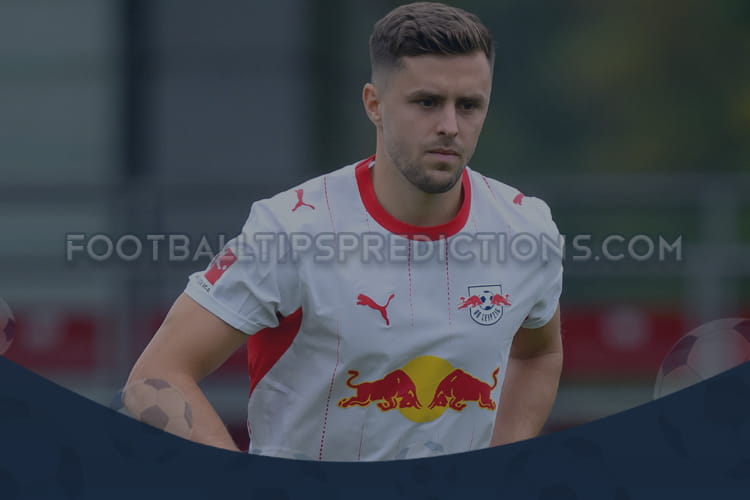
Christoph Baumgartner has returned to parts of RB Leipzig training after more than four months out, while Rocco Reitz and Brajan Gruda also stepped up their recoveries.
Christoph Baumgartner steps up RB Leipzig comeback after four months out
Christoph Baumgartner has taken an important step towards returning to competitive football after participating in parts of RB Leipzig's team training for the first time since suffering the serious tendon injury that ruled him out of the World Cup. More than four months after the setback, the Austria international was finally able to work alongside his teammates again on Tuesday, providing an encouraging sign that one of the most difficult periods of his career may be approaching its final stages.
Baumgartner sustained the injury on June 1 while warming up for Austria's friendly against Tunisia in Vienna. What initially happened before a match that Austria eventually won 1-0 developed into a far more serious problem for the attacking midfielder, with the injury ultimately requiring surgery and ending his hopes of participating at the World Cup.
Since then, the 27-year-old has been following a carefully managed rehabilitation programme designed to restore his strength and allow him to return without creating unnecessary risks. Tuesday's involvement with the squad represented a relatively normal progression from a medical perspective, but after months of individual work and watching from the sidelines, it was understandably an important moment for Baumgartner himself.
The midfielder did not complete the entire session and is not yet considered ready to resume full training. Nevertheless, joining his teammates for selected exercises is the clearest indication so far that his recovery is progressing in the right direction.
World Cup dream ended before tournament began
The timing of Baumgartner's injury made the setback particularly painful. He had been preparing to represent Austria on the international stage when the problem occurred during the warm-up ahead of the friendly with Tunisia.
Instead of continuing his preparations for the World Cup, Baumgartner suddenly found himself facing surgery and an extended period away from football. The injury did not merely remove him from club competition during the opening months of the new season; it also cost him the opportunity to participate in one of the biggest tournaments of his international career.
For a player with 58 appearances for Austria, missing such a competition represented a significant personal disappointment. Baumgartner had already become an established member of the national team and would naturally have hoped to play an important role during the tournament.
The severity of the injury meant there was no realistic possibility of accelerating the recovery process. Once surgery became necessary, attention shifted completely towards ensuring that Baumgartner could recover properly and eventually return to his previous level.
That process has required patience. More than four months later, he is only now beginning to participate in small sections of collective work, illustrating how serious the problem was and why Leipzig remain cautious about setting a precise comeback date.
First steps back with Leipzig teammates
Tuesday therefore carried particular significance. Baumgartner was able to take part in selected sections of the team session for the first time since sustaining the injury, ending months in which much of his work had necessarily taken place separately from the main squad.
Returning to team training is an important psychological milestone for any player recovering from a long-term injury. Individual rehabilitation can restore physical strength and movement, but eventually the player has to become accustomed again to the speed, unpredictability and demands of working alongside teammates.
Baumgartner has not yet reached the point where he can complete every exercise or train without restrictions. His workload remains controlled, and Leipzig are expected to continue increasing his involvement gradually rather than attempting to accelerate the process unnecessarily.
There is still no confirmed date for when he will return to full team training, and the club have also not indicated when he could become available for competitive selection. The absence of a fixed timetable reflects the cautious approach often required during the final stages of a lengthy rehabilitation.
Even so, the sight of Baumgartner training alongside teammates again provides an encouraging development for both the player and the club. After a rehabilitation period lasting throughout the summer and into the new season, the possibility of a comeback is becoming increasingly realistic.
Leipzig have been without last season's leading contributor
Baumgartner's absence has been particularly significant because of the level he reached last season. The Austrian finished the campaign as Leipzig's leading scorer, producing 17 goals and 10 assists across 37 competitive appearances.
Those figures demonstrated how important he had become to the team before suffering the injury. His contribution extended beyond scoring, with the combination of goals and assists showing the influence he was able to have across Leipzig's attacking play.
Losing a player who directly contributed to 27 goals inevitably created a major gap heading into the new campaign. Leipzig have had to begin life under new coach Martin Demichelis without one of the most productive members of the previous season's squad.
That is another reason why Baumgartner's progress will be followed closely. His eventual return would restore an important attacking option for Demichelis and increase competition within the squad, although the coach will first have to wait until the Austrian is capable of training normally.
It would also be unrealistic to expect Baumgartner immediately to reproduce the form he showed before the injury. After more than four months without competitive football, regaining rhythm and match fitness will take time even once he receives medical clearance to play.
The priority for Leipzig will therefore be ensuring the midfielder reaches the point where he can train consistently before discussions begin about his first competitive appearance.
No firm comeback date for Austria international
Despite Tuesday's positive development, uncertainty remains over the next stage of Baumgartner's rehabilitation. It is not yet known when he will be able to participate fully in team sessions, and there is similarly no confirmed date for his return to the Leipzig squad on matchdays.
The difference between taking part in selected training exercises and being ready for competitive football remains considerable. Baumgartner will need to show that his body can cope with progressively greater workloads before the medical staff and coaching team consider increasing his involvement.
After a tendon injury requiring surgery, Leipzig have little incentive to rush the process. A setback at this stage could prolong the player's absence further, whereas a gradual progression offers a better chance of making the eventual return sustainable.
The encouraging element is that Baumgartner has now reached a phase in which he can begin reconnecting with the squad. That alone represents significant progress compared with the first months after surgery.
For the player, each successful training session should provide another indication that the most difficult stage of his recovery has passed. The precise date of his comeback remains uncertain, but for the first time since June, it is beginning to appear within reach.
Rocco Reitz also returns after thigh injury
Baumgartner was not the only Leipzig player to make progress on Tuesday. Rocco Reitz also returned to the training pitch and, like the Austrian, completed limited parts of the session with the first-team group.
Reitz has been unavailable since the beginning of September after suffering a muscle injury in his left thigh. The midfielder, who joined Leipzig from Borussia Mönchengladbach, has therefore spent several weeks away from normal team activity.
His participation on Tuesday suggests his rehabilitation is also advancing, although he was not yet involved without restrictions. As with Baumgartner, the emphasis remains on gradually reintegrating him rather than immediately pushing towards competitive minutes.
For Demichelis, having Reitz move closer to availability is another welcome development. Injuries can quickly reduce the options available to a coach, particularly when several players are unavailable simultaneously, and the return of members of the squad provides greater flexibility as the season develops.
There is no confirmed date for Reitz's competitive comeback either, but his return to selected team exercises indicates that he has entered a more advanced stage of his rehabilitation.
Brajan Gruda progresses after abdominal muscle problem
Brajan Gruda completed the group of returning players on Tuesday, with the attacker also participating in parts of Leipzig's training session.
Gruda has been sidelined since the 2-0 away defeat against Bayer Leverkusen on September 20. He was forced to leave that match after only 26 minutes after suffering an abdominal muscle strain.
The injury subsequently prevented him from joining Germany for the latest international fixtures. Gruda had been selected for Jürgen Klopp's squad but was forced to withdraw before the matches against Serbia and Greece.
Germany went on to defeat Serbia 2-0 before drawing 0-0 away to Greece, while Gruda remained focused on recovering sufficiently to return to club football.
His involvement on Tuesday was therefore another positive sign. Like Baumgartner and Reitz, Gruda did not complete the entire session, but being able to participate alongside his teammates suggests the abdominal problem is improving.
The timing could eventually prove useful for both Leipzig and the German national team. The immediate priority, however, remains his club recovery, with no reason to accelerate his return before he is fully capable of coping with normal training intensity.
Three returns provide encouragement for Martin Demichelis
Having Baumgartner, Reitz and Gruda all back on the training pitch on the same day represented a positive development for new Leipzig coach Martin Demichelis. None of the three is yet ready to be treated as fully available, but their progress offers the prospect of strengthening the squad in the coming weeks.
Baumgartner's situation naturally attracts particular attention because of the duration and severity of his absence. Four months away following surgery is considerably different from recovering from a shorter muscular problem, and his return will therefore continue to be handled particularly carefully.
Reitz and Gruda are at different stages of their respective recoveries, but Tuesday provided evidence that Leipzig could gradually begin recovering several unavailable players at roughly the same time.
For Demichelis, that would be especially valuable as he continues to shape the team after taking charge. Coaches generally prefer to make tactical and selection decisions with as many players as possible available, rather than having their options dictated by injuries.
The return of the trio would not only increase squad depth but also create additional competition for places. That process remains some way away, however, because the immediate focus is still rehabilitation rather than selection.
Baumgartner finally beginning to see end of difficult period
For Baumgartner in particular, Tuesday's session should be regarded as a meaningful milestone rather than the end of the recovery process. The Austrian has spent more than four months working towards the moment when he could rejoin his teammates, even on a limited basis.
His last competitive period had ended unexpectedly before Austria's match against Tunisia, turning what should have been preparations for international football into the beginning of a lengthy rehabilitation.
The consequences were severe. He underwent surgery, missed the World Cup and has been unavailable during the opening part of Leipzig's season. For a player who had produced 17 goals and 10 assists in the previous campaign, the enforced absence came at a particularly frustrating moment in his career.
Now, however, the direction of travel is finally positive. Baumgartner is back on the grass with the team and has moved beyond exclusively individual rehabilitation work. There are still several steps to complete before he can be considered ready for a competitive return, but the possibility no longer feels as distant as it did during the summer.
Leipzig will continue to avoid setting unnecessary deadlines. The decision over when Baumgartner can resume full training will depend on his physical response to the increasing workload, and his return to matches will only follow once that stage has been successfully completed.
For the Austrian, though, simply training alongside his teammates again represents progress worth recognising. After surgery, the disappointment of missing the World Cup and months of rehabilitation, the 27-year-old can finally begin to look towards football rather than exclusively towards recovery.
Tuesday was not yet the comeback itself, but it was the clearest step towards one. With Reitz and Gruda also returning to parts of team training, Leipzig received an encouraging update on three injured players at once. For Baumgartner, whose absence has been the longest and most difficult of the three, it offered something particularly important: the first genuine sign that the end of his spell on the sidelines is finally coming into view.
 England
 Spain
Spain Germany
 Italy
Italy France
 Uefa
Uefa Netherlands
 Portugal
 Brazil
 Argentina
 Australia
 Austria
 Belgium
 Bulgaria
 Colombia
 Croatia
 Czech Republic
 Denmark
 Finland
 Greece
 Hungary
 Ireland
 Israel
 Japan
Japan Mexico
 Northern Ireland
 Norway
 Poland
 Romania
 Russia
 Scotland
 Slovakia
 Slovenia
 South Korea
 Sweden
 Switzerland
 Turkey
 Ukraine
 Usa
Usa