Antonio Cassano attacks Mourinho and admits Real Madrid regrets
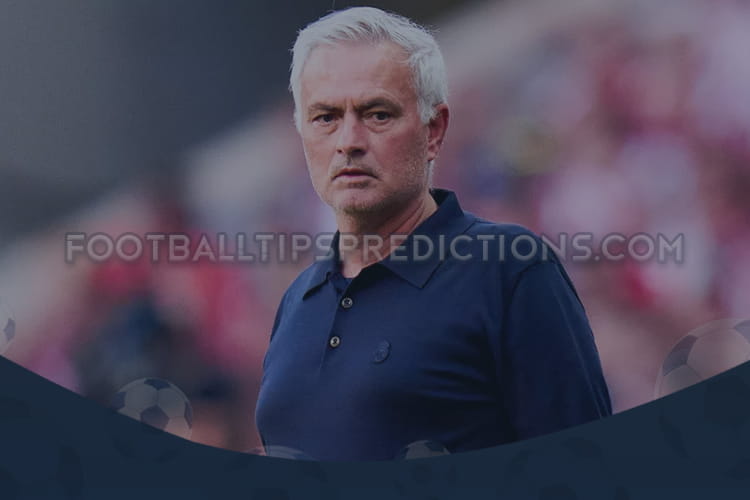
Antonio Cassano blasts Jose Mourinho ahead of Real Madrid vs Roma, questions his coaching methods and admits wasting his opportunity at the Spanish club.
Antonio Cassano launches fierce attack on Jose Mourinho and admits wasting Real Madrid opportunity
Antonio Cassano has delivered a remarkable assessment of José Mourinho, questioning the Portuguese manager's football philosophy, dismissing the importance of his extensive trophy collection and expressing disbelief that Real Madrid decided to appoint him. The former Italy international made the comments during an interview with Spanish newspaper As ahead of the Champions League encounter between Real Madrid and Roma, 2 clubs that played important roles in his own career.
Never a player known for avoiding controversy, Cassano offered an unusually harsh verdict on Mourinho, claiming that the Portuguese coach has become outdated and suggesting that his teams have rarely produced football worth watching. The former forward went as far as arguing that Mourinho should no longer be coaching at the highest level, despite the considerable success he has achieved throughout his career.
Cassano also took the opportunity to revisit his disappointing spell at Real Madrid, admitting that his lack of discipline, poor physical condition and preference for enjoying life away from football prevented him from fulfilling his potential at one of the world's most prestigious clubs. His reflections combined criticism of Mourinho with considerable self-criticism, as he acknowledged that his failure in Spain was largely the result of his own decisions rather than circumstances beyond his control.
The interview also included enthusiastic praise for Lionel Messi, whom Cassano continues to regard as an incomparable footballer. Although he recognises the enormous ability of younger attacking players such as Lamine Yamal, Raphinha and Rodrygo, the Italian believes that nobody in the modern game approaches the level established by the Argentine superstar.
Cassano believes Roma have a better coach than Real Madrid
The upcoming Champions League meeting between Roma and Real Madrid provided Cassano with an opportunity to compare the sporting direction of 2 clubs he knows particularly well. Having represented both teams during his playing career, the former forward was asked to assess the differences between them, but his response quickly developed into a direct criticism of Mourinho.
Cassano believes Roma have an important advantage in the technical area because of Gian Piero Gasperini, whose approach to football he clearly admires. By contrast, he considers Mourinho's methods unsuitable for a club with Real Madrid's history and expectations.
"Roma and Real Madrid are 2 very different teams. To begin with, Roma have a fantastic coach and Real Madrid don't, because Mourinho doesn't like playing football, he only likes talking," Cassano declared.
The Italian did not stop there. He also questioned the decision of Real Madrid president Florentino Pérez to place his faith in Mourinho, arguing that the appointment was difficult to understand given the Spanish club's standing in world football.
"It's incredible that Real Madrid, the greatest team in history, have hired Mourinho. I don't understand how Florentino decided to appoint him. It drives me crazy," he continued.
Cassano then offered an extraordinary hypothetical prediction, suggesting that the outcome of the Champions League encounter would be dramatically different if the 2 managers exchanged positions.
"If we swapped the managers and Gasperini were on the Real Madrid bench, Real Madrid would win 10-0," he said.
Although clearly exaggerated, the comment illustrates the strength of Cassano's preference for Gasperini's interpretation of the game. The former Italian international places considerable importance on attacking ambition, tactical movement and the ability of a coach to create a recognisable playing identity. For him, those characteristics appear to carry more weight than reputation or an extensive collection of honours.
His criticism also reflects a familiar divide in football discussions. Some observers assess managers primarily through the trophies they win and the results they achieve, while others place greater emphasis on the style of play and the quality of performances. Cassano belongs firmly to the latter category and makes little effort to conceal that preference.
However, his statements remain personal opinions rather than established conclusions about Mourinho's abilities. The Portuguese manager's achievements across different clubs demonstrate that his methods have produced significant success, even if Cassano strongly disagrees with his approach to the sport.
Mourinho trophy collection fails to impress the former Italy international
One of the most striking aspects of Cassano's criticism was his willingness to dismiss Mourinho's achievements as evidence of his quality as a coach. The Portuguese manager has built a career around winning major competitions, establishing a reputation for preparing teams to succeed in demanding environments and securing important victories against strong opposition.
For Cassano, however, those accomplishments do not necessarily demonstrate that a manager produces attractive or progressive football. He believes the quality of a team's performances should be the central measure of coaching ability, regardless of the number of trophies accumulated over time.
"Gasperini has only won one Europa League, but I don't care about trophies. What matters to me is what I see on the pitch," Cassano explained.
He then delivered another uncompromising assessment of Mourinho, claiming that the Portuguese coach's tactical ideas belong to an earlier period of the game.
"Mourinho is no longer capable of coaching. He's been very lucky because none of his teams have played good football. His footballing philosophy became outdated 10 years ago," he argued.
Those remarks underline Cassano's belief that modern football requires coaches to evolve continuously. Tactical trends change, opponents develop new ways of pressing and defending, and successful teams must adapt their attacking structures to overcome increasingly sophisticated defensive organisations.
In Cassano's view, Mourinho has failed to make the adjustments necessary to remain at the forefront of those developments. He appears to believe that the manager's reputation is still heavily influenced by earlier successes rather than the football produced by his teams in more recent periods.
The former Italy international also criticised what he sees as Mourinho's preference for public controversy over discussions about football itself.
"His career has left no legacy, only arguments with everyone. He likes talking about other things, but not about football," Cassano claimed.
That assessment is particularly severe because Mourinho's career has influenced numerous coaches and produced notable achievements in several major European competitions. Cassano's comments should therefore be understood as an expression of his personal frustration with the Portuguese manager's style and public image, rather than a neutral summary of his professional record.
Nevertheless, the Italian's argument is consistent throughout the interview. He does not deny that Mourinho has won trophies, but he rejects the idea that those achievements should automatically settle debates about the quality of his coaching.
Cassano questions the influence of Jorge Mendes on Mourinho career
Cassano also brought Portuguese agent Jorge Mendes into his criticism, suggesting that Mourinho's relationship with one of football's most influential representatives has helped him secure opportunities at major clubs.
"One of his greatest advantages is having Jorge Mendes as his agent, because he always finds him good teams," Cassano said.
The comment adds another dimension to the former forward's argument. Rather than focusing exclusively on tactical decisions and performances, Cassano questioned the circumstances that have allowed Mourinho to remain associated with prominent clubs throughout his managerial career.
His remarks should not be interpreted as evidence that Mourinho's appointments were secured through improper arrangements. Cassano was expressing his view of the role played by the manager's professional representation, without providing evidence that would establish any irregularity.
Agents regularly play important roles in negotiations between managers and clubs, just as they do in transfers involving players. Their responsibilities can include identifying opportunities, discussing contractual conditions and helping clients evaluate potential career moves.
In Mourinho's case, Cassano appears to believe that strong representation has contributed to his ability to obtain attractive positions even when his footballing methods have attracted criticism.
However, the Italian's argument does not account for every factor that clubs consider when appointing a manager. Experience, previous results, leadership, familiarity with demanding environments and the ability to handle pressure are all relevant considerations, particularly for institutions operating under constant scrutiny.
Real Madrid's decision to appoint Mourinho is therefore open to debate on sporting grounds, but Cassano's remarks remain an especially hostile interpretation of that decision rather than an assessment supported by detailed evidence in the interview.
Champions League encounter brings Cassano back to 2 former clubs
The timing of the interview is significant because Cassano's career included spells at both Roma and Real Madrid. His experiences at the 2 clubs were markedly different, giving him a personal perspective on the demands associated with each institution.
At Roma, Cassano developed his reputation as an exceptionally gifted attacking player, capable of producing moments of creativity and technical quality that made him one of Italian football's most recognisable talents.
His ability attracted the attention of Real Madrid, who brought him to Spain during the 2005/06 season. The transfer represented a major opportunity for the Italian forward to establish himself outside Serie A and demonstrate his quality at one of the most prestigious clubs in the world.
However, the move failed to produce the success that had been anticipated. Cassano struggled to establish himself consistently, and his period in Madrid became associated as much with questions about his discipline and physical condition as with his performances.
His experience provides an interesting background to his comments about the current meeting between Roma and Real Madrid. Although he admires the Spanish club's history and considers it the strongest institution in football, his own relationship with Madrid remains complicated by the disappointment of an opportunity he believes he wasted.
That personal history does not make his prediction about the Champions League encounter more reliable, but it explains why the fixture carries a particular significance for him. Cassano understands the pressure associated with representing both clubs, even if his strongest opinions now concern their respective managers.
His admiration for Gasperini also helps explain why he refuses to treat Real Madrid's reputation as decisive. Despite recognising the enormous stature of the Spanish side, he believes the influence of the coach can fundamentally change the way a team performs.
Whether that assessment proves relevant to the European encounter remains to be seen. What is clear is that Cassano's comments have placed additional attention on the tactical comparison between the 2 benches.
Former Real Madrid forward admits he lacked discipline in Spain
While Cassano was uncompromising in his criticism of Mourinho, he adopted a very different tone when discussing his own career. Instead of blaming coaches, teammates or the circumstances surrounding his transfer to Madrid, the former Italian international openly accepted responsibility for failing to make the most of his talent.
Asked about suggestions that he did not work hard enough during matches, Cassano responded with laughter and an admission that his dedication never consistently matched his natural ability.
"Did I run too little? That's true," he said, laughing.
"I had a lot of talent and very little dedication. Everyone knows that. I didn't have the willpower to eat less and work harder, but I was happy in my own way," he continued.
The comments offer a revealing insight into how Cassano now views his playing career. He does not question the technical qualities that allowed him to compete at the highest level, but he recognises that talent alone was insufficient to fulfil the expectations associated with his move to Real Madrid.
Elite football requires more than natural ability. Players must maintain physical condition, adapt to tactical demands, recover effectively between matches and demonstrate consistency throughout a demanding competitive calendar.
For a player joining a club such as Real Madrid, those requirements become particularly important because competition for places is intense and opportunities to establish a regular position can be limited.
Cassano acknowledged that his attitude towards training and diet prevented him from meeting those standards. His admission that he preferred enjoying his life away from football is particularly striking because he now recognises how much that approach cost him professionally.
There is also an element of self-awareness in his reflections. Rather than attempting to present himself as the victim of difficult circumstances, he admits that he made poor choices and that the consequences were largely predictable.
His comments suggest that he can now look back on the period with a combination of regret and humour. Although he does not describe his time in Madrid as entirely unhappy, he understands that his personal enjoyment came at the expense of his sporting ambitions.
Cassano recalls embarrassing Real Madrid presentation
Cassano's memories of Real Madrid also included his official presentation, an occasion that attracted attention because of his unusual clothing.
Rather than arriving in the more formal attire generally associated with such an important event, the Italian appeared wearing an extravagant jacket that became one of the memorable details of his introduction to the Spanish club.
Looking back 20 years later, Cassano admitted that he struggled to understand his own decisions at the time.
"I don't know what was going through my head 20 years ago. I was a fool. I was wearing a horrible jacket and clothes that weren't appropriate for the occasion," he recalled.
"That's how I was. Sometimes I did stupid things, and in Madrid, even more so," he added.
Although the episode was relatively minor compared with the sporting difficulties that followed, it illustrates the unconventional personality that accompanied Cassano throughout his career.
Real Madrid presentations carry considerable symbolic importance. They introduce players to supporters, attract extensive media attention and represent the beginning of a relationship between a new signing and one of football's most recognisable institutions.
Cassano's appearance immediately became a talking point, reinforcing the impression of a player whose individual personality did not always conform to traditional expectations.
In retrospect, he appears to regard the incident as another example of his immaturity. He recognises that he was entering a major professional opportunity but did not always behave in a manner consistent with the responsibilities involved.
That assessment is notably different from his comments about Mourinho. When discussing the Portuguese coach, Cassano focuses on perceived tactical weaknesses and career choices. When discussing his own failure at Madrid, he offers little justification and accepts that the responsibility was his.
Italian admits arriving overweight and wasting a major opportunity
Cassano was even more direct when asked whether he believed he had wasted his chance to succeed at Real Madrid.
Rather than offering a diplomatic explanation, the former forward made a deliberately exaggerated remark about how badly he had behaved during his time in Spain.
"Without a doubt. I should have gone to prison," he said, laughing.
The statement was clearly intended as a humorous expression of regret over his lack of professionalism, not as a literal admission of criminal conduct.
Cassano then explained the reasons behind that assessment.
"My behaviour was terrible. I preferred eating and going out to training. I was 10 kilos overweight. It was entirely my fault," he admitted.
Those comments represent one of the strongest acknowledgements of personal responsibility in the interview. Cassano openly recognised that his physical condition was incompatible with the demands of playing regularly for a club of Real Madrid's stature.
Carrying significant excess weight can affect a professional footballer's mobility, endurance and ability to maintain intensity over the course of a match. It can also complicate preparation for training sessions and reduce the consistency required to compete against elite opposition.
For an attacking player whose strengths included creativity, close control and quick changes of direction, failing to maintain the necessary physical condition could make it more difficult to translate natural talent into effective performances.
Cassano's acknowledgment that he was responsible for the situation suggests that he no longer considers external explanations necessary. He had the opportunity to establish himself at Real Madrid, but his personal habits prevented him from making the most of it.
After an unsuccessful period in Spain, he returned to Italian football with Sampdoria, continuing a career that would remain associated with outstanding technical ability and an unpredictable personality.
His reflections on Madrid illustrate a familiar challenge in elite sport: the difference between possessing exceptional talent and maintaining the discipline required to express that talent consistently at the highest level.
Messi remains the greatest player Cassano has ever seen
Despite the critical tone of much of the interview, Cassano also spoke with genuine admiration about Lionel Messi, whom he considers an exceptional figure in the history of football.
Asked about the players who continue to impress him, the former Italian international immediately identified the Argentine as being on a completely different level from his contemporaries.
"Above all, Messi. He plays at another level. There has never been anyone like him in the history of football," Cassano said.
He praised Messi's continued ability to influence matches despite approaching 40 years of age, suggesting that his technical intelligence and individual qualities remain unmatched.
"He's above everyone else and continues to be an extraordinary phenomenon at almost 40 years old. He's incomparable," he continued.
Cassano's admiration for Messi is consistent with his wider philosophy about football. Throughout the interview, he repeatedly emphasised the importance of technique, creativity and the quality of performances rather than focusing exclusively on trophies or public reputation.
Messi represents those characteristics in an exceptional form. His ability to control the rhythm of attacking moves, identify spaces and create opportunities has allowed him to remain influential across different stages of his career.
For Cassano, the Argentine's greatness is not simply a question of goals, assists or honours. He appears equally impressed by the way Messi plays football and the level of technical understanding he continues to demonstrate.
That perspective helps explain why the Italian is so enthusiastic about the Argentine while remaining dismissive of some highly successful coaches. Cassano's judgments are driven primarily by what he sees on the pitch and the pleasure he derives from watching particular styles of football.
Lamine Yamal, Raphinha and Rodrygo praised but placed below Messi
Cassano also acknowledged the quality of several outstanding attacking players currently competing at the highest level, including Barcelona's Lamine Yamal and Raphinha, as well as Real Madrid forward Rodrygo.
He made clear that he admires their ability and enjoys watching them play, but insisted that comparisons with Messi remain premature or inappropriate.
"There are other very good players, such as Yamal, Raphinha and Rodrygo of Real Madrid, whom I really like, but Messi is far ahead of all of them and everyone who will come after him," Cassano said.
He concluded his assessment with an unequivocal prediction.
"There will never be anyone like him," he declared.
Although such comparisons inevitably involve personal preferences, Cassano's argument highlights the difficulty of evaluating players from different generations and at different stages of their careers.
Yamal, for example, represents an emerging generation with many years of football potentially ahead of it, while Messi has already established a career defined by extraordinary longevity and achievements.
Raphinha and Rodrygo bring different attacking qualities to their respective teams, demonstrating the variety of technical profiles found among elite forwards. Each can contribute through movement, creativity and decisive actions in important matches.
Cassano recognises those strengths but does not believe they place any of the players on the same level as Messi.
His comments are especially emphatic because they extend beyond current footballers. By insisting that even future generations will struggle to produce a player comparable to the Argentine, Cassano is expressing a belief that Messi's combination of talent and influence is historically unique.
That remains a subjective footballing judgment, but it is one that Cassano clearly holds with considerable conviction.
A career of extraordinary talent and controversial decisions
The contrast between Cassano's admiration for Messi and his regrets about Real Madrid reveals an interesting theme running throughout the interview.
On one hand, he celebrates footballers whose natural ability is supported by exceptional consistency and the capacity to influence matches over many years. On the other, he openly acknowledges that his own career did not always reflect the dedication required to achieve comparable longevity at the highest level.
His talent was never the principal issue in Madrid. Real Madrid had recruited him because of his technical qualities and the potential he had demonstrated in Italian football. The problem, according to Cassano himself, was that he did not approach the opportunity with the seriousness it demanded.
He now recognises that training habits, diet and preparation were essential parts of professional success, even if he was unwilling to make those sacrifices at the time.
That personal experience also makes his comments about coaching philosophy particularly interesting. Cassano is exceptionally demanding when evaluating the football produced by other people, but he is equally direct when acknowledging the mistakes that limited his own career.
He does not attempt to defend his behaviour in Spain or suggest that Real Madrid failed to appreciate his talent. Instead, he admits that he was overweight, lacked discipline and preferred enjoying himself to working consistently.
His willingness to discuss those failures openly gives the interview a different dimension from a conventional attack on a rival manager. It is also a reflection on what happens when exceptional ability is not matched by the attitude required to succeed at the highest level.
For Cassano, the Madrid years appear to remain a reminder of an opportunity that should have produced much more than it eventually did.
Cassano criticism adds another dimension to Real Madrid and Roma clash
The upcoming Champions League encounter between Real Madrid and Roma will now take place against the backdrop of Cassano's unusually direct comments about the clubs' respective managers.
His preference for Gasperini is unmistakable, and his criticism of Mourinho leaves little room for interpretation. Cassano believes the Italian coach offers a more attractive and effective interpretation of modern football, while the Portuguese manager represents an approach he considers increasingly outdated.
However, the outcome of an individual Champions League match depends on many factors beyond the reputation or philosophy of the coach. Squad quality, tactical execution, physical condition, individual mistakes and the ability to respond to changing circumstances can all determine the result.
Cassano's suggestion that Real Madrid would win 10-0 with Gasperini in charge is therefore best understood as an exaggerated expression of admiration rather than a realistic sporting forecast.
His comments also underline the different ways coaches are evaluated. Mourinho's supporters can point to his achievements and ability to deliver results in demanding situations, while critics such as Cassano argue that success should also be measured through attacking ambition and the quality of football produced.
The debate is unlikely to be resolved by a single match, regardless of the result. Nevertheless, the encounter provides an opportunity to examine 2 different coaching approaches in a high-profile European setting.
For Cassano, the fixture has particular personal significance because of his experiences with both clubs. Roma formed an important part of his development as a player, while Real Madrid represented the major opportunity abroad that he now admits he failed to exploit.
Those experiences appear to have shaped both his admiration for the clubs and his willingness to speak openly about their current direction.
Cassano stands by his football philosophy despite past regrets
Antonio Cassano's interview combined several elements that have long defined his public personality: outspoken opinions, sharp criticism, admiration for exceptional technical ability and an unusually candid willingness to discuss his own mistakes.
His attack on Mourinho was particularly uncompromising. He questioned the Portuguese manager's tactical relevance, dismissed his trophy collection as insufficient proof of coaching quality and suggested that his professional connections had contributed to his continued presence at major clubs.
At the same time, Cassano expressed enormous admiration for Gasperini, making clear that he values coaches who produce the type of football he enjoys watching. His comments were provocative, but they also reflected a consistent personal philosophy in which style and creativity carry considerable importance.
His reflections on Real Madrid offered a very different perspective. Rather than criticising the club for his unsuccessful spell, Cassano accepted responsibility for arriving in poor physical condition, failing to train with sufficient dedication and wasting an opportunity that many footballers would consider the pinnacle of their careers.
He also showed that his passion for outstanding individual talent remains unchanged. Lionel Messi continues to occupy a unique position in his assessment of football history, ahead of the impressive attacking players representing the current generation.
As Real Madrid prepare to face Roma in the Champions League, Cassano's comments have added an unexpected layer of controversy to the build-up. Mourinho has once again become the target of an outspoken critic, while Gasperini has received an emphatic endorsement from a former player familiar with both clubs.
Ultimately, the interview revealed as much about Cassano's own relationship with football as it did about the managers and players he discussed. He remains convinced that the beauty of the game matters more than statistics or trophies, even while acknowledging that his own failure to combine talent with discipline prevented him from achieving everything he might have accomplished.
Nearly 20 years after his disappointing experience in Madrid, Cassano continues to look back on that period with humour and regret. His criticism of Mourinho may attract the greatest attention, but his admission that he wasted an extraordinary sporting opportunity provides an equally revealing insight into a career remembered for both exceptional ability and missed potential.
 England
 Spain
Spain Germany
 Italy
Italy France
 Uefa
Uefa Netherlands
 Portugal
 Brazil
 Argentina
 Australia
 Austria
 Belgium
 Bulgaria
 Colombia
 Croatia
 Czech Republic
 Denmark
 Finland
 Greece
 Hungary
 Ireland
 Israel
 Japan
Japan Mexico
 Northern Ireland
 Norway
 Poland
 Romania
 Russia
 Scotland
 Slovakia
 Slovenia
 South Korea
 Sweden
 Switzerland
 Turkey
 Ukraine
 Usa
Usa