Slot admits uncertainty about his future at Liverpool
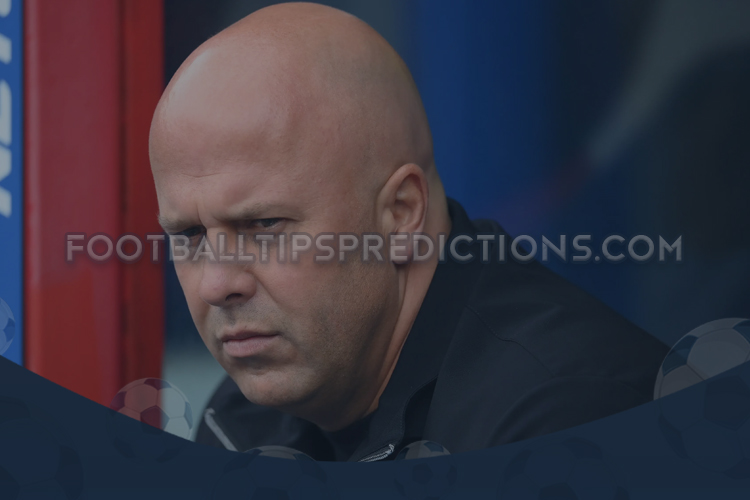
Slot’s Liverpool future is under scrutiny after a sharp dip in form, costly signings failing to deliver, and reports of an end-of-season review, despite the club remaining in the FA Cup and Champions League.
Slot guided Liverpool impressively to the league title in his debut season, a campaign that quickly cemented the Dutchman’s reputation as a coach capable of handling both the tactical demands and the relentless scrutiny that comes with managing at Anfield.
Twelve months later, however, the mood around the club is far more uneasy. After heavy investment in the summer and heightened expectations to build on that title, Liverpool’s second season under Slot has drifted off course, leaving the manager’s position under increasing focus.
Results have been the primary driver of that pressure. With 27 of 38 Premier League matches played, Liverpool sit sixth in the table, already 16 points behind leaders Arsenal. For a side that began the season talking about defending the crown and competing across all fronts, the scale of the drop-off has been stark. There have been performances that suggest the underlying structure remains intact, but too many matches have been defined by inconsistency: strong spells of control followed by stretches where Liverpool look vulnerable in transition, or blunt in the final third when opponents sit deep and deny space.
The EFL Cup exit in October sharpened criticism early, removing what is often seen as the most realistic domestic route to silverware for a team juggling league and European commitments. Liverpool remain alive in both the FA Cup and the Champions League, but the sense persists that progress in those competitions may be required not merely as a bonus, but as a key factor in determining how the club assesses Slot’s second year.
A substantial part of the current debate has centered on recruitment and how Liverpool’s marquee arrivals have adapted. Big-money signings such as Florian Wirtz and Alexander Isak have, so far, failed to consistently justify their price tags. There have been flashes moments of quality in isolated matches but not the week-to-week impact expected of players brought in to raise the ceiling of an already title-winning squad. The adjustment period has prompted questions about fit: whether the new pieces align with Slot’s pressing structure and positional demands, and whether the balance between creativity, vertical threat, and defensive security has been disrupted.
Compounding the footballing issues, Slot’s relationship with the dressing room has come under scrutiny following reports of a public clash with Mohamed Salah in December. Even in elite squads, tension between a manager and a talisman is not unusual, but at a club like Liverpool where senior players carry significant influence and where the “message” in the dressing room is scrutinized as closely as the tactical plan such incidents inevitably fuel speculation. At the time, rumors of an early dismissal circulated widely, yet Liverpool’s leadership reportedly maintained its backing for Slot, at least through the winter period.
Now, the focus is shifting toward a formal end-of-season assessment. According to Indykaila, Liverpool plan to evaluate Slot’s position on Monday, 25 May, one day after the club finishes the Premier League campaign with a home fixture against Brentford. That timeline is notable for two reasons. First, it implies the club want the full domestic picture league position, form over the final run-in, and any late-season momentum before reaching conclusions. Second, it suggests the evaluation is not necessarily contingent on a single outcome, such as Champions League qualification. The report claims that even if Liverpool secure a top-four (or Champions League qualifying) finish, Slot is not guaranteed to keep his job.
That detail underlines the broader reality at top clubs: qualification may be a minimum requirement, but it is rarely the only one. Liverpool’s internal review is likely to examine multiple dimensions of performance, including tactical coherence, injury management and squad rotation, adaptation to opponents, and the development of younger players. Recruitment integration will be another key theme: whether the summer signings are trending upward and whether their struggles reflect individual adaptation challenges, mismatched profiles, or systemic issues in how the team functions. Communication and leadership both within the staff and with senior players will also be assessed, especially given the reported friction involving Salah.
There is also a scenario in which the timetable shifts significantly. Indykaila reports the evaluation would be delayed by more than a week, to Tuesday, 2 June, if Liverpool reach the Champions League final. In practical terms, that would allow the club to avoid making or signaling major decisions while still competing in the biggest match of the season. It would also reflect how European success can alter the narrative quickly: a deep Champions League run tends to increase patience, soften criticism of domestic inconsistency, and provide a tangible achievement around which the club can rebuild.
Liverpool’s European position is, at least on paper, encouraging. With 18 points from eight matches, the Reds finished the Champions League league phase in third place, earning direct qualification for the round of 16. That placement matters because it reduces fixture congestion and grants more time on the training pitch something Slot has previously valued for implementing detailed positional structures and pressing triggers. It also strengthens the argument that Liverpool remain competitive at the top level, even if their league form has faltered.
In the round of 16, Liverpool will face a two-legged tie against the winner of a play-off between Galatasaray and Juventus or Club Brugge and Atlético Madrid. Each potential opponent carries a distinct challenge. A Juventus side typically organized and difficult to break down would test Liverpool’s patience and chance creation. Atlético Madrid would bring their familiar intensity and tactical discipline over two legs. Galatasaray and Club Brugge, while not carrying the same reputation, are often dangerous at home and can punish lapses in concentration. For Slot, those ties could become defining. A convincing European performance would strengthen his case, while a flat elimination could intensify doubts particularly if domestic form does not improve in parallel.
As things stand, Liverpool’s season appears to be heading toward a hinge point: a final stretch in the league, a knockout path in Europe that offers both risk and opportunity, and a board-level review that may prioritize not only results but the trajectory and cohesion of the project. Slot’s first year bought him credibility. His second has raised uncomfortable questions. Whether he remains the man tasked with steering the next phase at Anfield could depend on what Liverpool look like not only where they finish when the season’s decisive weeks arrive.
 England
 Spain
Spain Germany
 Italy
Italy France
 Uefa
Uefa Netherlands
 Portugal
 Brazil
 Argentina
 Australia
 Austria
 Belgium
 Bulgaria
 Colombia
 Croatia
 Czech Republic
 Denmark
 Finland
 Greece
 Hungary
 Ireland
 Israel
 Japan
Japan Mexico
 Northern Ireland
 Norway
 Poland
 Romania
 Russia
 Scotland
 Slovakia
 Slovenia
 South Korea
 Sweden
 Switzerland
 Turkey
 Ukraine
 Usa
Usa