Pedri will be able to play against Alavés
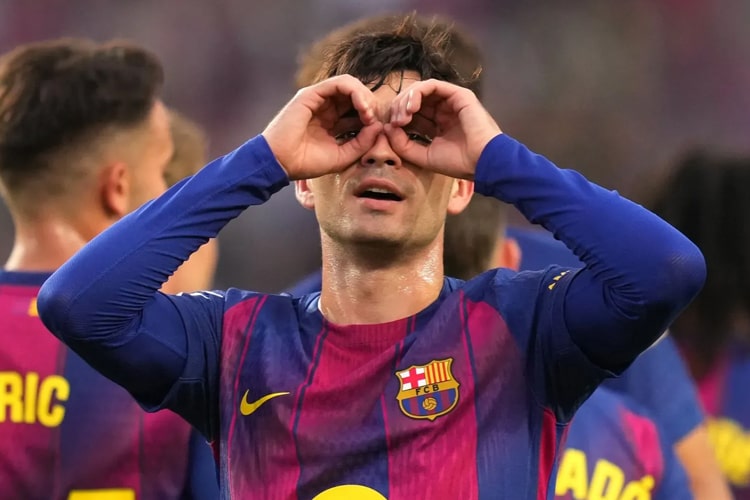
Pedri is finally ready to return for Barcelona against Alavés, giving Hansi Flick a crucial boost in the decisive stretch of the season. With Raphinha also back to full fitness and ready to start, Barça regain two key attacking pieces, although Pedri will be eased in gradually to avoid any new setback.
Good news for Hansi Flick. The German coach will be able to count on Pedri for next weekend’s match against Alavés.
The Canary Islander trained on Thursday with the rest of the squad and is ready to return to action, a boost that arrives at a crucial part of the season for Barcelona. There had been speculation that he might make it in time for the game against Chelsea, but that was not the case. Flick chose not to take any risks with the midfielder, preferring to protect him and avoid any possibility of a setback.
The club’s cautious approach is heavily influenced by what happened recently with Raphinha. The Brazilian winger had been pushed in his recovery in order to try to make the Clásico against Real Madrid. He trained with the rest of the group and seemed to be on track, but his discomfort returned and he ultimately failed to make the squad for that match. That episode served as a warning. At Barcelona they are very clear that they cannot afford to lose Pedri again just when he is about to rejoin the dynamics of the team. For that reason, they decided not to include him in the trip to London despite the magnitude of the fixture against Chelsea.
Pedri’s involvement is considered vital for Flick, both tactically and emotionally. The coach said a few days ago that he was convinced Barcelona would improve in the coming games, and one of the main reasons behind that optimism is the return of the number eight. Pedri provides something that is very difficult to replace. His intelligence between the lines, his calmness under pressure and his ability to connect midfield and attack give Barcelona a completely different rhythm with the ball. When he is on the pitch, the team tends to keep possession higher up the field and control games more consistently.
This final month of competition is decisive for Barça’s objectives, and Flick knows that having Pedri available, even if it is only for a limited number of minutes at the beginning, could make the difference. The plan is not to throw him straight back into the starting eleven, but to manage his workload with great care. The idea is to give him minutes off the bench against Alavés, allow him to regain confidence and match rhythm and then gradually increase his participation as long as his body responds well. Everyone at the club is aligned around one key principle: no more unnecessary risks with one of the most important players in the squad.
Alongside Pedri, another important piece of the puzzle is Raphinha. The Brazilian has already featured in a couple of matches since his last setback, but until now he has only been used as a substitute, appearing for brief spells in the second half. According to the technical staff, he is now ready to start from the beginning again. His return to full fitness is significant, because Raphinha offers verticality, aggression in one against one situations and the kind of intensity in pressing that Flick wants from his wide players.
With Raphinha closer to his best level, Barcelona regain an attacking option that can stretch defences and create space for teammates. His presence on the right can open corridors for overlapping full backs and interior midfielders, while also forcing opponents to defend deeper. This helps players like Lewandowski, Yamal or Ferran Torres find better positions inside the box. For Flick, having a winger who can both run in behind and come inside to combine is fundamental for his game model.
In contrast, Pedri’s reintroduction will be much more gradual. The staff are fully aware of his injury history and the number of minutes he has accumulated in recent seasons, both for club and country. The objective now is to build a more sustainable physical base for him. That is why Flick will not hesitate to leave him on the bench even in big games if the medical department recommends caution. The idea is that Pedri arrives fresh, confident and healthy at the key stages rather than burning him out in his first appearances.
Beyond the physical issues, Pedri’s return also has a psychological dimension. His presence on the pitch tends to lift those around him. Teammates trust his decisions on the ball, supporters feel more confident when he is in the line-up and even the coach gains an extra weapon when matches become tight and require control. In difficult moments, having someone who can slow the game down, choose the right pass and avoid unnecessary losses is priceless. That is precisely what Barcelona have been missing in some of their more chaotic performances this season.
The coming weeks will test the depth and character of the squad. Barcelona still have important league fixtures and European commitments on the horizon, and Flick needs as many key players available as possible. With Pedri’s creativity and Raphinha’s explosiveness, the team regains a large part of its offensive identity. The German coach will now have more tactical flexibility. He can opt for a more positional, possession based approach with Pedri linking midfield and attack, or choose a more direct and vertical style by loading the wings with Raphinha and other fast forwards.
For Pedri himself, this new phase could mark a turning point. After several interruptions in his career due to physical problems, there is a strong desire within the club to design a long term plan that protects him. Flick’s arrival has brought a slightly different training and rotation philosophy, one that aims to manage workloads more strictly. The hope is that this time Pedri can put together a long stretch of games without being forced to stop again.
For the fans, the prospect of seeing Pedri back on the pitch and Raphinha closer to peak form is a reason for optimism at the end of a demanding season. Barcelona have struggled with absences, inconsistency and constant changes in the starting line-up, but with two of their most decisive players returning, there is a sense that the team might still finish strongly.
Against Alavés, all eyes will be on the bench to see when Flick decides to introduce Pedri. Even if it is only for twenty or thirty minutes, his first appearance after the injury will be one of the big stories of the weekend. It will also be a first test of how his body responds and how quickly he can reconnect with the rhythm of competition. Raphinha, on the other hand, could already be in the starting eleven, ready to show that he has left his problems behind.
For Hansi Flick, having both players back, even at different stages of their recovery, is exactly what he needed at this moment of the season. The challenge now is to combine ambition with prudence, so that the good news of Pedri and Raphinha’s return is not followed by yet another setback.
 England
 Spain
Spain Germany
 Italy
Italy France
 Uefa
Uefa Netherlands
 Portugal
 Brazil
 Argentina
 Australia
 Austria
 Belgium
 Bulgaria
 Colombia
 Croatia
 Czech Republic
 Denmark
 Finland
 Greece
 Hungary
 Ireland
 Israel
 Japan
Japan Mexico
 Northern Ireland
 Norway
 Poland
 Romania
 Russia
 Scotland
 Slovakia
 Slovenia
 South Korea
 Sweden
 Switzerland
 Turkey
 Ukraine
 Usa
Usa