Kvaratskhelia floats like Van Basten
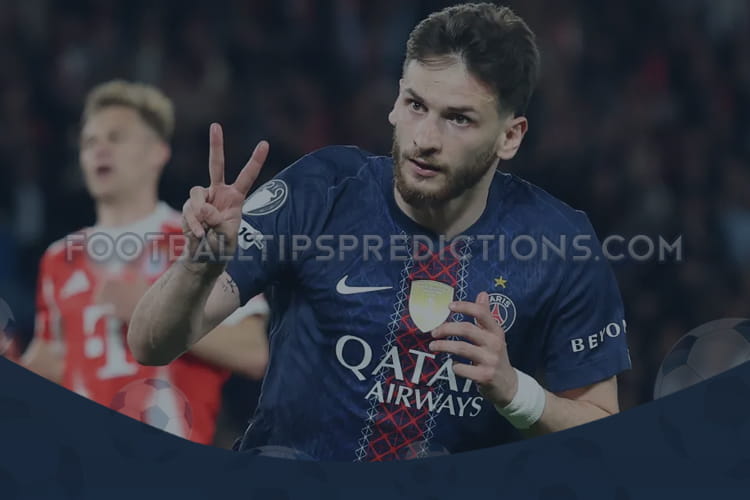
Khvicha Kvaratskhelia has rapidly developed into a serious candidate for the Ballon dOr and is now being compared to Marco van Basten, something that was once again clear against Bayern Munich on Tuesday. The Georgian has become the man who decides matches for Paris Saint-Germain, precisely when it matters most.
Kvaratskhelia Floats Like Van Basten As Ballon dOr Talk Grows Around PSG Star
Khvicha Kvaratskhelia has reached the kind of level where comparisons with legends no longer feel exaggerated. After another decisive performance for Paris Saint Germain in the extraordinary 5-4 victory over Bayern Munich, the Georgian forward is no longer being discussed only as one of the most exciting attackers in Europe. He is now being spoken about as a genuine Ballon dOr contender.
The Champions League meeting between PSG and Bayern Munich had everything: goals, rhythm, tension, attacking football and moments of individual brilliance. But amid the chaos of a 9-goal thriller in Paris, Kvaratskhelia once again stood out as a player capable of changing the emotional direction of a match. He did not simply participate in the spectacle. He helped define it.
That is why the discussion around him has changed so quickly. At Napoli, he was already admired for his dribbling, courage and unpredictability. At Paris Saint Germain, he has added consistency, maturity and a decisive edge in the biggest games. He now looks like a complete forward, a player who can beat opponents in 1-on-1 situations, create chances for others, score under pressure and work relentlessly without the ball.
The Van Basten Comparison Says Everything About His Style
Former France international Johan Micoud made one of the most striking comparisons around the match when he spoke about Kvaratskhelia on La Chaine LEquipe. Micoud compared the Georgian to Marco van Basten, not because they are identical players, but because of the elegance and lightness in the way they move.
Those who played with Van Basten often described him as a player who seemed to float, almost as if he did not touch the ground. Micoud sees something similar in Kvaratskhelia. It is not only about speed or technical skill. It is about the way he glides across the pitch, shifts balance, receives the ball and moves away from defenders before they can properly react.
That description fits Kvaratskhelia perfectly. He is not a forward who relies on brute force. He plays with rhythm, deception and timing. At full speed, he can look almost effortless. When he slows down, defenders become even more uncertain, because they know he can explode either inside or outside. That unpredictability is what makes him so difficult to control.
Comparing any modern player to Van Basten is always a major statement. Van Basten represents elegance, technical purity and decisive quality at the highest level. For Micoud to place Kvaratskhelia in that type of conversation shows how far the PSG attacker has come. It also shows how strongly his performances are affecting people who understand elite football.
A Ballon dOr Candidate Built By Big Matches
Micoud did not stop at the stylistic comparison. He also said that he would nominate Kvaratskhelia for the Ballon dOr, describing him as a top-class player. That statement no longer feels like a romantic reaction to 1 strong night. It reflects a wider feeling that has been growing in France, Italy and across European football.
In Italy, where Kvaratskhelia first became a major name during his time at Napoli, that belief is also becoming stronger. After the wild 5-4 win over Bayern Munich, Goal Italia wrote that the Ballon dOr was no longer an impossible dream for him. That phrase captures the current mood well. What once might have sounded like fantasy now looks like a serious debate.
The reason is simple: Kvaratskhelia is producing when the stakes are highest. Ballon dOr campaigns are not built only on beautiful dribbles or highlight clips. They are built on decisive influence in matches that shape seasons. In that area, the Georgian is making a powerful case.
His Champions League numbers this season are exceptional. With 10 goals and 5 assists in 14 matches, he has been directly involved in 15 goals in the competition. Those are elite figures by any standard, but they become even more important when placed in context. He has not been accumulating numbers only in comfortable group-stage wins. He has been decisive in the knockout phase, where pressure is greater and defensive quality is higher.
His Numbers Put Him Among The Best In Europe
Since arriving at Paris Saint Germain, Kvaratskhelia has already been involved in 20 Champions League goals. That separates him from every other player in the same period and strengthens the feeling that PSG have found their new attacking reference point. More importantly, 14 of those goal involvements have come in the knockout stage, the part of the competition where reputations are truly built.
That statistic is perhaps the strongest argument in his favour. Many players can shine across a long domestic season. Fewer can repeatedly decide Champions League knockout matches. Kvaratskhelia is becoming one of those rare players who seems to grow when the stage becomes larger.
Across all competitions this season, he has recorded 18 goals and 9 assists in 43 matches. His overall PSG record now stands at 26 goals and 17 assists in 75 appearances. Those numbers show both productivity and balance. He is not only a scorer and not only a creator. He is both.
Modern elite forwards are expected to do more than finish chances. They must press, carry the ball, create superiority, attack space, combine with teammates and influence the match even when they do not score. Kvaratskhelia does all of that. His evolution at PSG has turned him from a spectacular winger into a complete attacking weapon.
Henry And Bale Add Weight To The Praise
The praise has not come only from French and Italian observers. Thierry Henry, speaking on CBS Sports, also highlighted the fearlessness of Kvaratskhelia. Henry pointed to the way he wants the ball in difficult moments and has the ability to decide matches. In the view of the former Arsenal and France forward, these are the type of players who help teams win titles.
That matters because Henry understands what separates great attackers from truly decisive ones. It is one thing to ask for the ball when a team is winning comfortably. It is another to demand it when the match is tense, the opponent is pressing and every decision carries risk. Kvaratskhelia belongs to the second category.
Gareth Bale went even further in his appreciation, noting that defenders never know what Kvaratskhelia is going to do. Bale also highlighted his ability to produce magic in tight spaces. That is a crucial part of his game. Many quick players are dangerous when they have open grass ahead of them. Kvaratskhelia can also hurt opponents when there is almost no space at all.
That ability makes him especially valuable in the Champions League. At the highest level, teams often defend compactly, close the central zones and try to force attackers into crowded areas. Kvaratskhelia does not need perfect conditions. He can manufacture danger from nothing, using close control, body feints and sudden changes of direction.
PSG Have Found A Player For The Biggest Moments
Paris Saint Germain have spent years searching for the right balance between star power and collective identity. Kvaratskhelia now looks like the kind of player who can fit both needs. He has the individual brilliance to decide matches, but he also contributes to the collective work demanded by modern football.
Against Bayern Munich, that balance was visible again. PSG did not win only because of 1 player, but Kvaratskhelia gave them the kind of threat that changes how opponents defend. Bayern could not relax when he received the ball. Every touch carried the possibility of a dribble, a pass, a shot or a sudden acceleration into space.
That constant uncertainty affects an entire defensive structure. Full backs become cautious. Centre backs get dragged out of position. Midfielders drop deeper to help. Space opens elsewhere. Even when Kvaratskhelia is not directly involved in the final touch, his presence shapes the match.
This is what separates elite attackers from ordinary productive players. The best forwards do not only add goals and assists. They bend the game around them. Kvaratskhelia is now doing that for PSG, particularly in Europe.
The International Question Still Complicates The Ballon dOr Race
The Ballon dOr debate, however, is never simple. Micoud also pointed out an important issue: international performance often matters heavily in the voting. Players are judged not only on club form, but also on what they do on the biggest stage with their national team.
For Kvaratskhelia, that creates a clear difficulty. Georgia have not qualified for the World Cup, meaning he will not have that platform available. In a year where other candidates may shine for major national teams, this could count against him.
It is one of the harsh realities of individual awards in football. A player can be extraordinary at club level but still be limited by the competitive level and tournament presence of his national side. Kvaratskhelia can dominate Champions League matches, but he cannot create a World Cup campaign for Georgia if the team is not there.
Even so, this should not automatically remove him from the race. The Ballon dOr has never been decided by 1 fixed formula. Some years are shaped by international tournaments. Others are decided by Champions League dominance, domestic superiority or an exceptional individual season that becomes impossible to ignore.
Shevchenko Shows That Club Dominance Can Be Enough
The example of Andriy Shevchenko in 2004 remains highly relevant. The Ukrainian won the Ballon dOr as an AC Milan player in a year when Ukraine were not present at a major international tournament. That year, Porto won the Champions League and Greece became European champions, yet Shevchenko was recognised for his individual quality and club-level impact.
That precedent matters for Kvaratskhelia. It shows that a player from a country outside the traditional international powerhouses can still win the award if his club performances are strong enough. It also proves that absence from a major international tournament is a disadvantage, but not necessarily a definitive barrier.
If PSG go all the way in the Champions League and Kvaratskhelia remains central to that success, the argument in his favour will become very strong. A Champions League triumph, combined with decisive knockout performances and elite statistics, would make him impossible to ignore.
The key word is dominance. If a player dominates the biggest club competition in the world, influences the decisive matches and becomes the face of a winning team, voters will have to take him seriously. Kvaratskhelia is moving closer to that type of campaign.
The Bayern Return Leg Could Shape His Season
The next test arrives on Wednesday, 6 May 2026, when Bayern Munich host Paris Saint Germain at the Allianz Arena. After a first leg that ended 5-4 and produced 9 goals, the return match is loaded with tension. PSG have the advantage, but it is a narrow one. Bayern have been hurt, but they are far from finished.
For Kvaratskhelia, this is another opportunity to strengthen his case on the biggest possible stage. A decisive performance in Munich would carry enormous weight. The world will be watching, the pressure will be extreme and the tie remains open enough for individual moments to decide everything.
These are the nights that define Ballon dOr campaigns. It is not enough to shine when everything is comfortable. The true contenders leave their mark when the margin for error is small. Kvaratskhelia has already done that several times this season. Now he has another chance to do it again.
Bayern will certainly pay special attention to him. After what happened in Paris, the German side know they cannot allow him to receive the ball freely in dangerous zones. They may double up on him, force him wider or try to close him down before he turns. But that is easier to plan than to execute.
A Decisive Night Awaits In Munich
The second leg is set up perfectly. Bayern Munich need to attack. Paris Saint Germain know they can score again. Both teams have enough firepower to create another dramatic match, but both also have defensive concerns after the first meeting. That combination makes the Allianz Arena clash one of the most anticipated games of the season.
For PSG, the challenge is to protect the advantage without losing their identity. If they become too passive, Bayern can overwhelm them. If they attack without control, the game may become chaotic again. Kvaratskhelia will be central to finding that balance, because his ability to carry the ball and relieve pressure could be just as important as his capacity to score or assist.
In matches like this, transition moments can decide everything. A single dribble past the first defender can open an entire pitch. A clever pass can remove 3 opponents from the play. A composed finish can change the emotional temperature of the stadium. Kvaratskhelia has all of those tools.
Bayern will believe in a comeback, and rightly so. They scored 4 goals in Paris and showed enough attacking power to trouble PSG again. But Paris will also travel with confidence. They know they hurt Bayern repeatedly, and they know Kvaratskhelia is in the kind of form that can unsettle any defence in Europe.
From Napoli Hero To PSG Leader
Kvaratskhelia arrival at PSG marked a new chapter in his career. At Napoli, he became a cult figure and one of the most exciting players in Serie A. His dribbling, confidence and natural flair made him a symbol of a team that played with energy and imagination. But moving to PSG brought a different kind of pressure.
In Paris, expectation is constant. Every Champions League match is examined closely. Every major signing is judged by what happens in Europe. Kvaratskhelia had to prove that he could remain decisive outside the environment where he first became a superstar. He has done more than that. He has grown.
His game now looks more rounded. He still has the spontaneity that made him special, but he appears more efficient, more physically resilient and more aware of when to accelerate and when to manage possession. That maturity is one of the reasons the Ballon dOr conversation feels credible.
At the highest level, talent must be combined with decision-making. The best players know when to take risks and when to simplify. Kvaratskhelia is learning that balance, and PSG are benefiting from it.
A Player Who Makes Football Feel Different
Beyond numbers and awards, there is something emotional about watching Kvaratskhelia play. Some players are effective. Others are entertaining. The truly special ones are both. Kvaratskhelia belongs in that rare category because he produces end product without losing the sense of wonder in his game.
That is why the Van Basten comparison resonates. It is not about copying the exact role or career of the Dutch legend. It is about the feeling created by movement, elegance and technical command. Kvaratskhelia can make difficult actions look natural. He can make defenders look unbalanced without appearing rushed himself.
Football supporters respond to that kind of player. They remember goals, but they also remember sensations: a turn, a touch, a sudden change of direction, a moment when the stadium rises before the chance has even been completed. Kvaratskhelia gives them those moments.
That matters in the Ballon dOr race as well. The award is based on performance, but football is not judged by statistics alone. Narrative, emotion and memory all play a role. Kvaratskhelia is building all 3 at the same time.
The Ballon dOr Dream No Longer Feels Distant
There is still a long way to go before the final Ballon dOr judgement is made. Other players will have their own arguments. International tournaments, domestic titles, Champions League results and individual statistics will all influence the debate. But Kvaratskhelia has already placed himself firmly in the conversation.
His case is built on a powerful combination: elite Champions League production, decisive knockout performances, a starring role for PSG, growing recognition from respected former players and a style that captures attention. That is exactly the kind of profile that can drive a serious Ballon dOr campaign.
The absence of Georgia from the World Cup may hurt him, but it does not erase what he is doing at club level. If PSG reach the Champions League final, and especially if they win it with Kvaratskhelia as one of their main figures, the conversation will become impossible to dismiss.
For now, the Georgian forward keeps moving, gliding and deciding matches. Micoud saw echoes of Van Basten in the way he seems to float. Henry sees a player without fear. Bale sees a nightmare for defenders. PSG see a leader for the biggest nights.
On 6 May in Munich, Kvaratskhelia will have another chance to turn admiration into history. The stage is ready, the tie is alive and the Ballon dOr debate is no longer a fantasy. It is becoming part of his season.
 England
 Spain
Spain Germany
 Italy
Italy France
 Uefa
Uefa Netherlands
 Portugal
 Brazil
 Argentina
 Australia
 Austria
 Belgium
 Bulgaria
 Colombia
 Croatia
 Czech Republic
 Denmark
 Finland
 Greece
 Hungary
 Ireland
 Israel
 Japan
Japan Mexico
 Northern Ireland
 Norway
 Poland
 Romania
 Russia
 Scotland
 Slovakia
 Slovenia
 South Korea
 Sweden
 Switzerland
 Turkey
 Ukraine
 Usa
Usa