Juventus the transfer window is still open
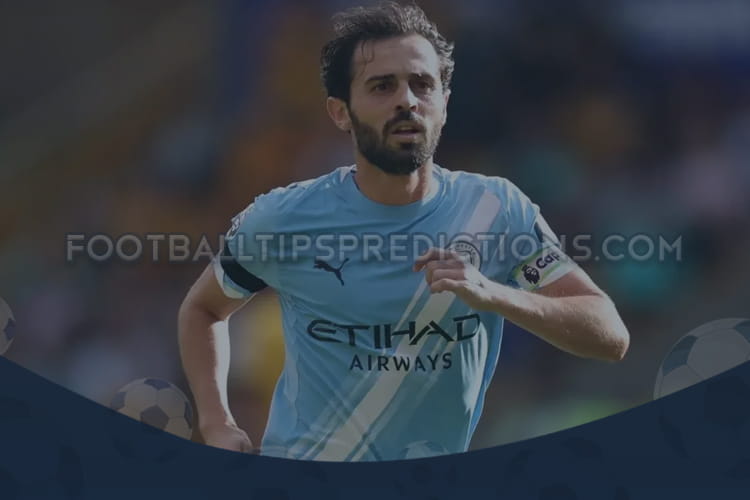
Juventus keep planning beyond the window, working at Continassa on renewals and free-agent targets, with Senesi and Celik monitored as key options and big-name midfield ideas like Bernardo Silva, Tonali, and Kessie also on the radar.
Juventus are treating the idea of a closed transfer market as a myth rather than a reality.
Inside the club, planning is already moving at full speed, not only for the next window but for the entire next season, with a clear focus on building continuity in the sporting project while staying inside strict financial boundaries. At Continassa, the work is less about flashy announcements and more about constructing a sustainable squad: identifying who should be renewed, who should be replaced, and which opportunities on expiring contracts can strengthen the group without forcing the club into heavy transfer fees.
This is why the first step of the strategy is a screening process: players whose deals expire in June and who can already sign pre-contract agreements. It is a market Juventus have always watched closely, but the current environment makes it even more central. When budgets are controlled and the margin for error is low, free-agent profiles become a way to add quality while keeping amortization and cash outlay manageable. It is also a market that requires speed, because when a player is available for free, the competition tends to be wider and more intense.
Before looking outward, Juventus are starting with what they already have. The internal renewals are the foundation because they determine how many gaps need to be filled. Weston McKennie is the clearest example: the American has reportedly reached a basic agreement to extend his stay in Turin, a sign that Juventus still value his versatility, intensity and ability to cover multiple roles depending on the tactical setup. Keeping a player like McKennie reduces the need to search for a similar profile elsewhere, which is often expensive.
The more delicate file is Dusan Vlahovic. Juventus appear to be postponing any definitive decision to the end of the season, leaving room for evaluation based on form, goals, and the direction of the project. Striker decisions tend to be the most expensive and the most politically sensitive inside a club: they shape the identity of the team and usually involve high wages, major fees, or both. Waiting can be a way to keep options open, but it also reflects how complex the Vlahovic situation can become depending on Juventus results, coaching choices, and the offers that might arrive.
With those internal dossiers underway, Juventus are shaping the external priorities. The first clear need being assessed is a left-footed center-back. That detail matters. A left-footed central defender changes build-up patterns, improves angles on the first pass, and helps a back line balance itself when playing out under pressure. Juventus want someone who can genuinely compete for a place with Kelly rather than merely offer depth, because competition is part of how elite squads maintain standards over long seasons.
That search has reportedly landed on Marcos Senesi, whose contract at Bournemouth expires on 30 June. From Juventus perspective, Senesi ticks several practical boxes: left-footed, experienced, and available without a transfer fee. But the lack of a fee is exactly what makes the operation complicated. Juventus would not be bidding alone. A free agent with a strong profile becomes a target for multiple leagues, and the battle shifts from negotiating a transfer price to negotiating wages, bonuses, and commissions.
The economic framework described suggests Juventus believe they could secure Senesi on an annual salary somewhere between 3 and 5 million, which is a meaningful investment but still consistent with a controlled approach if the club avoids a large fee. The other encouraging factor is that the player is reportedly open to the destination, and that matters in these deals. When a free agent prefers one club, the negotiations can become more manageable even when other teams are interested, because the player can tilt the process.
Juventus are also looking at the fullback market, again with an emphasis on practicality. In the contest with Oscar Mingueza, who is also approaching contract expiry at Celta Vigo, Juventus appear to prefer Zeki Celik. The reasons presented are straightforward and heavily rooted in risk reduction: Celik already knows Serie A, he is adapted to the tactical demands and rhythm of the league, and he has proven he can deliver consistent performances. When you recruit for a role that requires tactical discipline and repeatability, familiarity with the league is often a big advantage.
There is a second point that makes Celik especially attractive in this context: cost control. His current salary is around 2 million per season, which is described as comfortably within Juventus reach. Again, the pattern repeats: Juventus are scanning opportunities where the financial side does not become a burden, allowing them to improve the squad without heavy structural stress on the wage bill.
Even the statistical profile is being used to support the idea. A passing accuracy of 83.8 percent suggests reliability in possession and a lower risk of cheap turnovers, while winning 58.1 percent of aerial duels points to competitiveness in physical phases. For a wide defender, that aerial number can matter more than people assume, especially against teams that attack the far post or force back-post situations. Add in his age and experience, and the club can justify the move as a low-drama, functional reinforcement rather than a gamble.
Beyond the identified priorities, the broader list of free agents is described as long and tempting, especially for a club that cannot afford to overload the balance sheet with expensive operations. This is where Juventus are clearly trying to keep ambition alive without losing financial discipline. They are not closing the door to major names, but they are framing them as investments that require careful evaluation rather than impulsive moves.
One such name is Bernardo Silva, who is suggested as a possible exit candidate from Manchester City. For Juventus, a player like Silva represents a high-impact profile: quality between the lines, technical control in tight spaces, decision making in the final third, and top-level experience in big matches. But even if the transfer fee is not the issue, wages and total package would be. Signing a player like Silva would likely require a major salary commitment and possibly significant signing bonuses, which is why the language around him is cautious: an opportunity to watch, assess, and potentially act on if conditions align.
In midfield, the article frames Sandro Tonali as the big dream. That describes both the level of the player and the likely complexity of any deal. Tonali would not be a simple free-agent operation, and the cost dynamics would be very different. Still, mentioning him serves a purpose: it signals that Juventus want a midfield capable of setting the tone in top matches, not just holding shape.
At the same time, Juventus are also tracking Franck Kessie, another name with strong Serie A relevance. His profile is familiar to Italian football: power, ball carrying, physical presence, and the ability to give a midfield a harder edge. The suggestion is that he is in his final months in Saudi Arabia, which opens the door to a potential return. For Juventus, that would be a way to raise the level of the midfield without necessarily having to win a bidding war for younger, more expensive targets. It would also bring a player already adapted to Serie A tactical demands, reducing integration risk.
Taken together, the plan being outlined is clear: Juventus are not treating the next season as something to solve later. They are already building the structure now, starting with internal renewals, then targeting specific positional needs with free-agent opportunities, and keeping a selective watch on bigger names that could elevate the squad if the financial puzzle fits.
The underlying message is that Juventus want to remain competitive without repeating the mistakes of excessive spending or incoherent squad building. Every name mentioned fits a logic: either low fee, manageable wages, proven adaptation to Serie A, or elite quality that could justify a bigger commitment. The transfer market might not be “open” in the public sense every day, but at Continassa the real market never stops, and Juventus are clearly trying to make sure they are ready before everyone else moves.
 England
 Spain
Spain Germany
 Italy
Italy France
 Uefa
Uefa Netherlands
 Portugal
 Brazil
 Argentina
 Australia
 Austria
 Belgium
 Bulgaria
 Colombia
 Croatia
 Czech Republic
 Denmark
 Finland
 Greece
 Hungary
 Ireland
 Israel
 Japan
Japan Mexico
 Northern Ireland
 Norway
 Poland
 Romania
 Russia
 Scotland
 Slovakia
 Slovenia
 South Korea
 Sweden
 Switzerland
 Turkey
 Ukraine
 Usa
Usa