For three years they called them losers
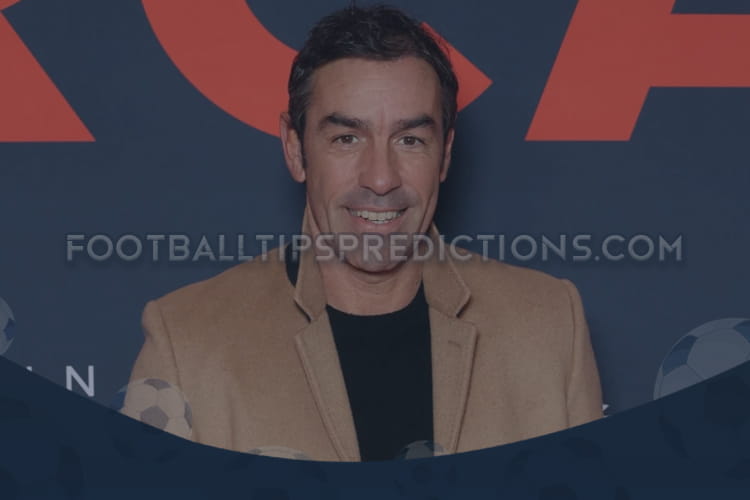
Robert Pires expressed emotion after Arsenal won the league title, praising Mikel Arteta and saying the club finally silenced years of criticism.
Robert Pires emotional as Arsenal finally silence the critics with title triumph
Robert Pires could not hide his emotion after seeing Arsenal crowned champions once again, in a season that has carried a powerful sense of redemption for the club, the players, the supporters and Mikel Arteta. For the former France international, who was part of one of the greatest periods in Arsenal history, this was not simply another league title. It was the end of a long wait, the answer to years of criticism and the confirmation that the project built in North London has finally reached the level many believed it could achieve.
Pires spoke with visible pride about the achievement, admitting that he was both very happy and deeply emotional. His words carried the weight of someone who understands what Arsenal means from the inside. He did not look at the title only as a former player watching from a distance, but as someone who still feels part of the Arsenal family and who has followed the recent frustrations of the club with genuine feeling.
For Arsenal, this title represents much more than the final league table. It is the reward for several years of growth, pain, near misses and intense public scrutiny. The team had come close before, finishing second on 3 occasions and being heavily criticised each time. In the eyes of many outside the club, those near misses became proof that Arsenal lacked mentality, experience or the ruthless edge required to finish the job.
Pires was clearly hurt by that narrative. He pointed out that, for 3 years, Arsenal had been described as losers. That word became attached to a group of players who were learning, improving and trying to close the gap to the top of English football. For Pires, the criticism was harsh, but the response could not have been stronger. Arsenal did not answer with excuses. They answered by becoming champions.
The emotional dimension is easy to understand. The last time Arsenal had won the league was in 2004, during the legendary Invincibles season. That team, managed by Arsène Wenger and featuring Pires himself, went through an entire Premier League campaign unbeaten and became one of the defining sides in English football history. Since then, the club had lived with the shadow of that greatness, often judged against a standard that was almost impossible to repeat.
Pires knows that comparison better than most. He was one of the symbols of that era, a technically elegant and intelligent player who gave Arsenal creativity, balance and goals from midfield. Between 2000/01 and 2005/06, he became one of the most admired players at Highbury, playing alongside names such as Thierry Henry, Patrick Vieira, Dennis Bergkamp, Freddie Ljungberg and Sol Campbell under the guidance of Wenger.
That is why his connection to the club remains so strong. Pires described Arsenal as a club very close to his heart, the place where he undoubtedly gave the best of himself in football. He credited Wenger and the players around him for helping him reach that level, but his words also showed that Arsenal gave him something beyond trophies. It gave him identity, belonging and a football home.
When Pires says Arsenal is special, a great club and a family, it does not sound like a convenient phrase from a former player. It reflects the relationship many of that generation still have with the club. Arsenal was not only a successful team during those years. It was a group with style, culture and a clear idea of football. That identity stayed with supporters, and it stayed with the players who helped build it.
This is also why the current title feels so meaningful. Mikel Arteta has not simply delivered a trophy. He has restored belief. Arsenal had spent years trying to rebuild after the Wenger era, changing managers, squads and strategies. There were moments when the club seemed far away from the top of the Premier League, but Arteta slowly created a new competitive structure, based on discipline, intensity, tactical detail and a younger core of players capable of growing together.
Pires made a point of praising Arteta, a figure he knows well. The Spanish coach has faced major pressure throughout the season, especially because Arsenal had fallen short in previous campaigns. Every difficult result brought fresh debate. Every tactical decision was examined. Every performance was compared with Manchester City, Liverpool and the strongest sides in Europe.
According to Pires, Arteta had to deal not only with the pressure that comes naturally at Arsenal, but also with regular criticism from former Manchester United players. That rivalry has always carried extra weight in English football, especially because of the history between Arsenal and United during the Wenger and Sir Alex Ferguson years. For Pires, some of those critics appeared to take real pleasure in questioning Arteta and his team.
The debate around the playing style of Arsenal also remained constant. Some observers admired the control, structure and defensive strength of the team. Others argued that Arsenal should be more expansive, more fluid or more dominant in certain matches. Pires accepted that the style can always be debated, but for him the most important fact is simple: Arsenal are champions again.
That point matters because football projects are often judged differently before and after a title. The same tactical caution that may be criticised during a title race can be seen as maturity once the trophy is won. The same controlled performance that may seem conservative in February can look decisive in May. Arteta has now crossed the line that changes the way his work will be remembered.
For the players, this title removes a heavy burden. Many of them had been part of previous campaigns that ended in disappointment, and those experiences could have broken the group. Instead, Arsenal used them as fuel. The team learned how to suffer, how to manage pressure and how to stay consistent across a demanding season. That mental evolution is one of the biggest reasons this triumph feels earned.
Pires understands that better than most because he was part of a champion team built on talent but also on personality. The Invincibles are remembered for their beauty, but they were also fiercely competitive. They had leaders, fighters and players who refused to accept defeat. Arteta has tried to create something with a modern identity, but the emotional demands are similar. To win the Premier League, talent is never enough.
The title also reconnects generations of Arsenal supporters. Older fans who remember 2004 can now celebrate a new era. Younger supporters, many of whom had never seen the club win the league, finally have their own title memories. For a club with the size and history of Arsenal, that matters enormously. The wait had become too long, and Pires made that clear in his reaction.
His happiness is not only nostalgia. It is pride in seeing Arsenal return to a place he believes the club should occupy. The Premier League has changed dramatically since his playing days, with greater financial power, deeper squads and more global competition. Winning the title now requires huge consistency and resilience. That makes the achievement even more significant.
For Arteta, the words of Pires will carry special value. Praise from a former Arsenal great is not just media noise. It is recognition from someone who helped define the standards of the club. Pires knows what championship football looks like, and he knows what it means to wear the shirt when expectations are at their highest.
The former midfielder also knows that criticism will never disappear completely. Arsenal will now be expected to defend their title, compete strongly in Europe and keep improving. The pressure will change shape rather than vanish. But after years of being told they were not ready, not strong enough or not ruthless enough, Arsenal have finally changed the conversation.
For Pires, that is the essence of the moment. Arsenal suffered, waited and absorbed criticism, but they reached the top again. The title ends a painful chapter and begins a new one, full of expectation and belief. It also gives Arteta and his players something that can never be taken away from them: proof that their journey was worth it.
 England
 Spain
Spain Germany
 Italy
Italy France
 Uefa
Uefa Netherlands
 Portugal
 Brazil
 Argentina
 Australia
 Austria
 Belgium
 Bulgaria
 Colombia
 Croatia
 Czech Republic
 Denmark
 Finland
 Greece
 Hungary
 Ireland
 Israel
 Japan
Japan Mexico
 Northern Ireland
 Norway
 Poland
 Romania
 Russia
 Scotland
 Slovakia
 Slovenia
 South Korea
 Sweden
 Switzerland
 Turkey
 Ukraine
 Usa
Usa