Cucurella on the dismissal of Enzo Maresca: I would not have made that decision
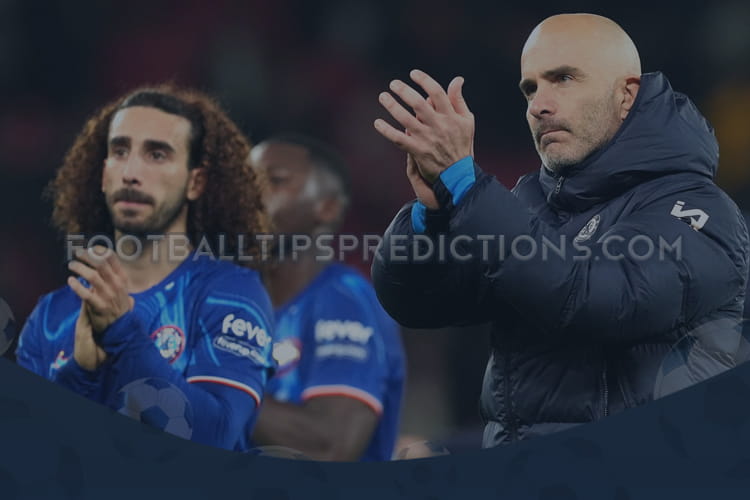
Marc Cucurella says he would not have supported Enzo Maresca dismissal at Chelsea and admits a future return to Barcelona would be difficult to refuse.
Cucurella questions Chelsea decision after Maresca exit and opens door to Barcelona return
Marc Cucurella has offered a revealing look into the mood inside Chelsea by admitting that he would not have supported the decision to dismiss Enzo Maresca, while also acknowledging that a future return to Barcelona would be difficult to reject if the opportunity ever appeared. The comments give fresh insight into both his personal ambitions and the uncertainty that has surrounded Chelsea during an uneven season marked by managerial change, inconsistent league form and another painful European setback.
The Spanish left back, now twenty seven, has become one of the more recognisable voices in a Chelsea squad that has often been discussed more for its potential than for its stability. His latest remarks show a player trying to balance commitment to his current club with honesty about the reality of elite football. On one side, he made it clear that he is happy in London and sees his time at Chelsea as an important life experience. On the other, he did not hide the emotional pull of Barcelona, the club where he grew up and where his football education began.
Cucurella came through the academy system at Barcelona, but his pathway to the first team never truly opened. Despite the prestige of being developed in one of the most famous football environments in the world, he made only one senior appearance before moving on in search of regular football. That decision eventually took him through Eibar, Getafe and Brighton, a journey that helped shape him into a more complete and resilient player. By the time Chelsea moved for him in 2022 for a fee of more than sixty five million euros, he had already built a reputation as an energetic full back with intensity, aggression and the ability to contribute at both ends of the pitch.
That personal history is important when considering his reaction to the idea of Barcelona returning for him. For players who have been formed by a club like Barça, the emotional link rarely disappears completely. Even after years away, the possibility of returning can still carry enormous weight. Cucurella made clear that he is not actively planning a move back to Spain now, but his words also suggested that such an offer would carry serious emotional and professional significance. It was not a declaration of intent, but it was certainly not a rejection either.
While those comments naturally attracted attention, the more explosive part of his interview concerned Chelsea and the decision to remove Enzo Maresca. That is where Cucurella was most direct. He openly admitted that he would not have made the same choice and suggested that the timing of the dismissal damaged the team. In doing so, he voiced a view that many players are often careful to avoid saying publicly. Rather than hiding behind diplomatic language, he pointed to the disruption caused by a mid season coaching change and the wider instability that has followed Chelsea throughout recent years.
According to Cucurella, the players understood what Maresca wanted from them and had built a meaningful connection with the Italian coach. That matters more than many outside observers realise. Tactical systems can take time to settle, but trust between a squad and its manager can be even more decisive. When players believe in a coach, understand his ideas and feel supported by him, they are often willing to push harder during difficult periods. Cucurella message suggested that Maresca had managed to create that feeling inside the dressing room, which made his departure even harder to absorb.
The defender also connected that relationship to Chelsea success in the Club World Cup, pointing out that winning a major title together can strengthen emotional bonds inside a squad. Moments like that do not only deliver silverware. They also create shared memories, reinforce belief and give players the sense that a project may be moving in the right direction. That is why the dismissal appears to have hit some members of the squad so hard. From Cucurella point of view, Chelsea did not simply remove a coach. The club interrupted a process that still needed time.
His criticism of the decision was not emotional for the sake of it. There was also a clear football argument behind it. Cucurella suggested that if a club is going to make such a major change, the better moment is often at the end of the season. That allows both players and staff to reset properly, gives a new coach a full pre season to implement ideas and reduces the sense of confusion that can come when a squad must suddenly adjust during the campaign itself. In his view, Chelsea have suffered precisely because of that lack of continuity. An interim spell under Calum McFarlane was then followed by the arrival of Liam Rosenior, meaning the squad had to absorb new messages and different methods without the time normally needed to make those changes work smoothly.
That sense of instability has been one of the defining themes of Chelseas recent seasons. The club has continued to invest heavily, particularly in younger players, with the ownership group backing a strategy built around the future. On paper, that approach offers clear upside. Young players can grow in value, develop into long term assets and potentially create a team capable of competing together for years. But Cucurella comments reflect the other side of that strategy. When too much responsibility falls on youth, there can be a shortage of experience in the biggest moments, especially in matches where calm decision making and big game maturity are just as important as technical quality.
That issue was exposed brutally in the Champions League round of sixteen against Paris Saint Germain. Chelsea were eliminated eight two on aggregate after defeats of five two and three nil, results that left little room for excuses. Cucurella admitted those losses were difficult to accept because they highlighted the gap that still exists between Chelsea and the very highest level in Europe. Training, ambition and effort may all be present, but when the elite matches arrive, details become decisive. Experience, control and emotional management often separate the contenders from the challengers.
His remarks about the PSG tie were especially telling because they moved beyond the frustration of one bad result. He appeared to question whether the current squad building model is enough on its own to deliver the very biggest honours. In simple terms, his message was that talent and youth are not always enough. If a club truly wants to fight for the Premier League and the Champions League, it also needs players who have lived through those moments before, understood the pressure and learned how to respond when games begin to turn against them.
Chelsea current league position adds further weight to everything Cucurella said. Sitting sixth in the Premier League is not a disaster, but it is below the level expected from a club with these resources and ambitions. It places the team in an awkward middle ground, close enough to remain relevant but not strong enough to silence doubts. That is why every public comment now carries extra significance. Cucurella has effectively described a squad that still believes it can become something serious, but also one that feels the cost of constant change.
For Chelsea supporters, his words may be both reassuring and frustrating. Reassuring because they show there are players inside the dressing room who care deeply about standards, stability and the direction of the club. Frustrating because they reinforce the idea that the project remains unfinished and perhaps more fragile than many had hoped. The message is clear. Chelsea still have quality, but quality alone does not create coherence. That requires time, trust and a structure that players can buy into over the long term.
As for Cucurella himself, the interview may strengthen his image as one of the more emotionally transparent figures at the club. He did not speak like someone preparing an immediate exit, but neither did he shut the door completely on the possibility of returning to Spain one day. For now, his focus remains on Chelsea and on trying to help the team navigate a difficult phase. But by speaking so openly about Barcelona, Maresca and the wider problems at Stamford Bridge, he has also highlighted the crossroads at which both he and the club now stand.
 England
 Spain
Spain Germany
 Italy
Italy France
 Uefa
Uefa Netherlands
 Portugal
 Brazil
 Argentina
 Australia
 Austria
 Belgium
 Bulgaria
 Colombia
 Croatia
 Czech Republic
 Denmark
 Finland
 Greece
 Hungary
 Ireland
 Israel
 Japan
Japan Mexico
 Northern Ireland
 Norway
 Poland
 Romania
 Russia
 Scotland
 Slovakia
 Slovenia
 South Korea
 Sweden
 Switzerland
 Turkey
 Ukraine
 Usa
Usa